Introduction
For commercial and industrial businesses in India, grid electricity costs have risen sharply—and the pressure isn't easing. DISCOM tariffs continue climbing across states, while Renewable Purchase Obligation mandates now require specific sectors to source growing percentages of power from renewables, with steep penalties for non-compliance.
The compliance burden is only part of the challenge. Global supply chains, private equity investors, and frameworks like BRSR and Science-Based Targets now require verifiable decarbonisation commitments—making the traditional single-source energy approach both financially and reputationally costly.
This guide provides a practical walkthrough of clean energy portfolio management for high-consumption industrial and commercial users. We'll cover what portfolio management means in practice, how to build a multi-source renewable strategy, and the tools needed to track performance across solar, wind, and hybrid assets.
TLDR
- A clean energy portfolio combines solar, wind, and hybrid sources with procurement instruments (PPAs, captive, open access) to cut costs and manage risk
- Portfolio management means actively optimising that mix—rebalancing contracts and responding to tariff and regulatory shifts
- C&I businesses can reduce energy costs by up to 40% by diversifying across renewable sources and procurement structures
- Unified visibility into tariffs, contracts, and generation data is essential to capture full value from clean energy investments
What Is Clean Energy Portfolio Management?
A clean energy portfolio is the combination of renewable energy sources, procurement contracts, and financing instruments a business uses to meet its electricity demand. This spans solar, wind, hybrid, and storage assets procured through Power Purchase Agreements (PPAs), group captive arrangements, open access, or rooftop installations.
Clean energy portfolio management is the ongoing process of planning, procuring, monitoring, and optimising this mix across three core objectives:
- Minimise energy cost through tariff arbitrage across procurement channels
- Ensure regulatory compliance — RPO obligations, carbon targets, and state-level mandates
- Maintain supply reliability for 24×7 operations across industrial facilities
Under the Electricity Act 2003, businesses have the statutory right to construct and operate captive generating plants and access open transmission for renewable procurement.
Portfolio management differs fundamentally from one-time procurement — it's dynamic, data-driven, and strategy-led, not a set-and-forget exercise. Energy shifts from a passive cost line item to an active business lever: one that directly affects landed production costs, green procurement credentials for export customers, and long-term exposure to grid tariff volatility.

Why C&I Businesses in India Are Building Clean Energy Portfolios
Regulatory Drivers
India's RPO mandates require businesses in specified sectors to source minimum percentages of consumption from renewables, with non-compliance penalties. These targets are increasing annually across states as India works toward its 500 GW renewable energy target by 2030. The Green Energy Open Access Rules 2022 lowered the capacity threshold from 1 MW to 100 kW, opening renewable procurement to mid-sized C&I consumers who previously fell below the eligibility threshold.
State Electricity Regulatory Commissions (SERCs) are tightening enforcement. Non-compliance carries real financial consequences:
- Revocation of captive status for failing proportionality or consumption tests
- Retroactive imposition of Cross-Subsidy Surcharges (CSS)
- Retroactive Additional Surcharges (AS) on prior consumption
Cost Economics
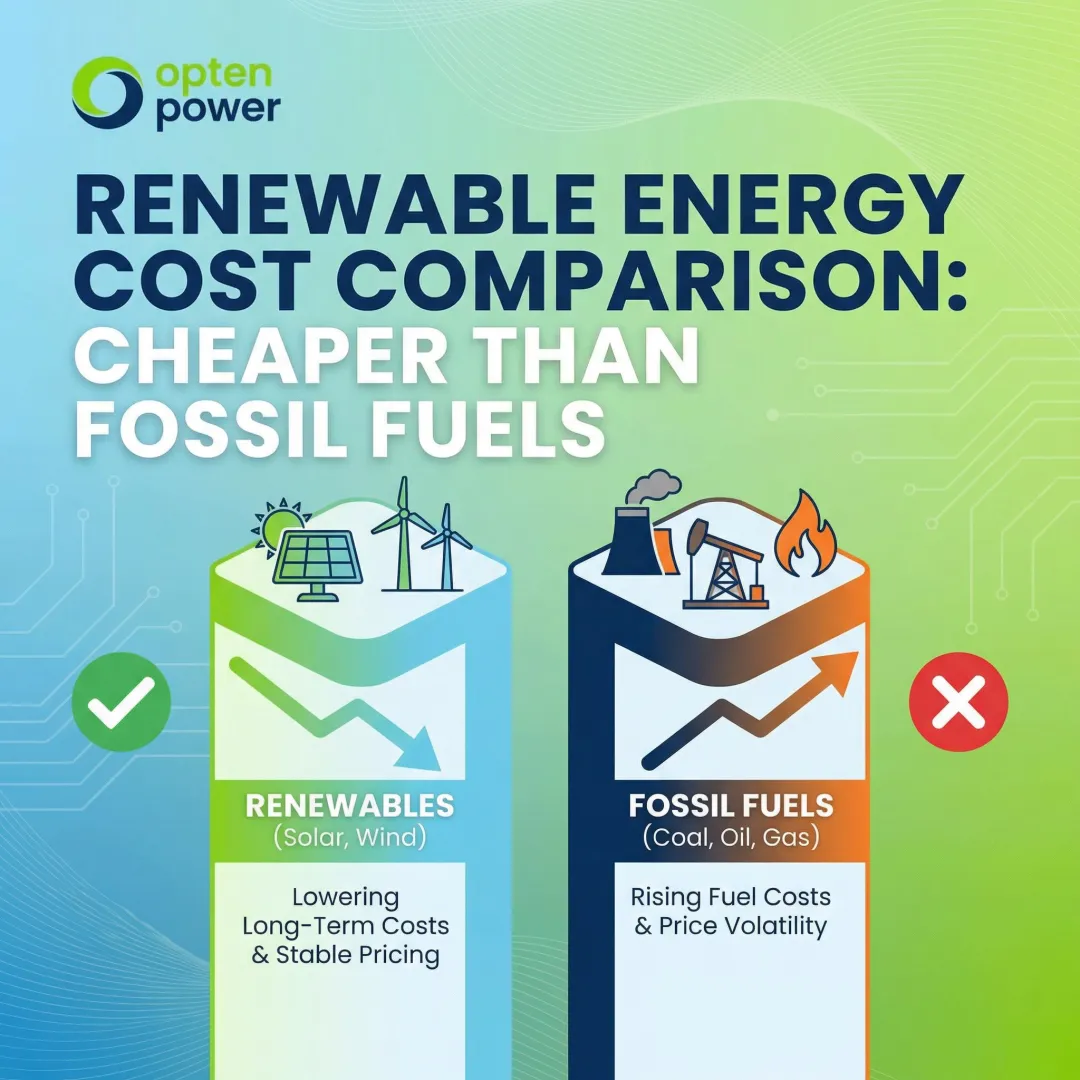
DISCOM tariffs have risen steadily, while the landed cost of renewable energy through long-term PPAs and open access has fallen. Many C&I buyers now face grid tariffs of ₹10–15 per unit, while renewable PPAs can deliver savings of ₹3–5 per unit—representing potential cost reductions of up to 40% for well-structured portfolios.
ESG and Business Pressure
Cost savings alone no longer drive renewable procurement decisions. Global supply chains, private equity investors, and sustainability frameworks (BRSR, Science-Based Targets) are pushing large enterprises to demonstrate decarbonisation.
A clean energy portfolio becomes a reporting and credentialing asset, not just a utility decision. For industries like steel, cement, textiles, and data centres, renewable procurement is increasingly a supply chain requirement.
Key Components of a Clean Energy Portfolio
Procurement Structures
Corporate PPAs
Corporate Power Purchase Agreements form the foundation of most C&I clean energy portfolios. These are long-term contracts (typically 10–25 years) with renewable energy developers that lock in a fixed or formulaic tariff below grid rates.
Two main types exist:
- On-site captive: The developer builds and operates generation assets directly on the buyer's premises
- Off-site open access: Power is wheeled through the state grid from a remotely located project
PPAs are the most common route to achieve scale, providing cost certainty and enabling businesses to hedge against rising grid tariffs while meeting RPO obligations.
Group Captive Arrangements
Group captive structures involve a C&I buyer holding at least 26% equity in a renewable project and drawing power as a co-owner. The Electricity Rules 2005 establish the strict "twin test" for captive status: not less than 26% ownership by captive users, and not less than 51% of generated electricity consumed for captive use.
Regulatory advantage: Lower open access charges in many states compared to pure PPA structures. Group captive is preferable when state regulations favour captive consumers or when buyers want greater control over project operations.
Open Access Procurement
Open access involves buying renewable energy from third-party generators via state transmission or distribution networks. Applicable wheeling, banking, and cross-subsidy charges vary significantly by state—making DISCOM tariff intelligence critical for accurate cost comparison.
CERC regulations and state-specific SERC orders govern this framework. For example, Gujarat's GERC Green Energy Open Access Regulations 2024 mandate ABT (Availability-Based Tariff) compliant meters for consumers above 1 MW and specify banking facility terms.
Technology Mix
Core Generation Assets
Utility-scale solar delivers the lowest cost per unit and fastest payback (3–4 years). Best suited for manufacturing units, warehouses, and commercial complexes with predictable daytime consumption and minimal maintenance requirements.
Wind energy produces higher output during evenings and monsoon seasons, complementing solar's daytime profile. Ideal for steel, cement, and textile operations running 24×7 that need consistent baseload coverage — typically recommended for requirements above 5 MW.
Hybrid solar-wind projects reduce generation variability by combining solar's daytime peak with wind's nighttime output, improving overall plant load factor. Particularly valuable for data centres, hospitals, and process industries that require round-the-clock supply and greater grid stability.

Battery Energy Storage Systems (BESS)
Storage enables round-the-clock renewable supply, reduces grid dependency during peak tariff hours, and helps continuous-process industries meet firm power requirements. BESS costs in India have dropped sharply in recent years, making storage an increasingly relevant consideration when structuring hybrid procurement portfolios — even where storage is sourced separately from the primary generation contract.
How to Build and Manage a Clean Energy Portfolio
Step 1: Assess Your Energy Demand Profile
Effective portfolio construction starts with a detailed demand audit:
- Map load curves by hour and season
- Identify peak consumption windows
- Determine what share of load can tolerate intermittency vs. what requires firm power
For heavy industries with continuous processes, this analysis defines what technology mix and storage sizing is feasible. A cement plant with 24×7 base load will require a different portfolio than a commercial complex with daytime-only consumption.
Step 2: Set Portfolio Objectives and Constraints
Translate business goals into portfolio parameters:
- Target renewable percentage: RPO compliance + ESG ambition
- Maximum acceptable tariff: Benchmark against current DISCOM rates
- Preferred contract tenors that balance cost certainty with flexibility
- Risk appetite: offtake obligations and volume commitments
- Geographic preferences tied to state-level DISCOM regulations and wheeling charges
Step 3: Evaluate and Procure Across Developers
The procurement process involves issuing RFPs to multiple developers across solar, wind, and hybrid technologies, then comparing bids on a like-for-like basis: tariff, project readiness, developer track record, and state-specific charges.
Critical challenge: Comparing bids without standardised benchmarks leads to poor decisions. Real-time DISCOM intelligence across states is essential for accurate cost comparison.
Platforms like Opten Power address this directly — providing C&I buyers access to 4+ GW of vetted capacity across 16 states, with standardised landing price analysis that prevents overpayment. Automated RFPs and pre-approved contracts cut deal timelines by up to 50%, and instant IRR and payback analysis replaces weeks of manual calculation.
Step 4: Structure Contracts to Manage Risk
Key contractual considerations include:
- Pass-through provisions: For regulatory changes (open access charge revisions)
- Force majeure terms: Defining acceptable exceptions to supply obligations
- Performance guarantees: Minimum generation clauses with penalties
- Exit provisions: Flexibility for changing business circumstances
Poorly structured contracts are the most common source of portfolio underperformance. Modular PPA templates that standardise legal and commercial terms across procurement models reduce back-and-forth and get deals closed faster.
Step 5: Monitor, Optimise, and Rebalance
Ongoing portfolio management requires:
- Tracking actual generation against contractual commitments
- Reconciling with metered consumption
- Managing banked energy (use-it-or-lose-it risk in state banking regulations)
- Identifying underperforming assets
- Evaluating whether new procurement opportunities should be added
A unified portfolio dashboard is essential at this stage — consolidating all assets, contracts, and energy data into a single interface so underperformance gets caught early and rebalancing decisions are based on real numbers.

Key Risks in Clean Energy Portfolio Management (And How to Mitigate Them)
Regulatory and Policy Risk
Changes to open access charges, wheeling tariffs, banking rules, or RPO targets can significantly alter the economics of existing contracts.
To manage this exposure:
- Build regulatory review clauses into PPAs
- Diversify across states to reduce single-state concentration
- Monitor DISCOM policy changes in real time
Generation Variability and Supply Risk
Solar and wind output varies seasonally and daily. For industries needing 24×7 power, over-reliance on a single source creates shortfalls requiring expensive grid top-up.
Supply risk is manageable with the right contract structure:
- Diversify the technology mix — hybrid projects and storage reduce single-source dependence
- Model worst-case generation scenarios before signing contracts
- Maintain grid backup agreements for periods of low renewable output
Counterparty and Project Execution Risk
Supply-side risk doesn't end at signing. Developer delays in commissioning, financial stress on smaller IPPs, or disputes over metering and billing can all disrupt supply.
- Vet developers on financial health, project pipeline, and past commissioning record
- Prefer developers with operational track records over first-time builders
- Include commissioning milestones with penalties in contracts
Offtake Obligation Risk
Long-term PPAs commit buyers to minimum offtake volumes. If production volumes decline (plant shutdown, restructuring), a buyer may be locked into paying for unconsumed energy.
Structuring contracts carefully limits this exposure:
- Match contract volumes conservatively against projected minimum load
- Negotiate flexibility provisions for volume adjustments
- Avoid over-contracting relative to base load
Tools and Metrics for Portfolio Performance Tracking
Key Performance Indicators
Track these KPIs monthly, not annually, to enable corrective action:
- Renewable energy percentage: Actual vs. target consumption
- Weighted average tariff: Across all contracts vs. DISCOM benchmark
- Generation vs. contractual commitment: Plant Load Factor (PLF) / Capacity Utilisation Factor (CUF) compliance
- RPO compliance status: By state
- Carbon emissions avoided: For ESG reporting
Portfolio Management Dashboard Requirements
A purpose-built dashboard should:
- Consolidate real-time generation data from all assets
- Flag deviations from expected output
- Track banking balances by state
- Display contract expiry timelines for proactive renewal planning
Opten Power's Portfolio Management Dashboard brings this together for C&I buyers — consolidating data across multiple projects and procurement models into one interface so teams can act on issues before they become compliance problems.

Regular Portfolio Reviews
Real-time dashboards surface the data; periodic reviews turn that data into decisions. Conduct comprehensive reviews at least annually to:
- Reassess whether the current mix aligns with updated demand profiles
- Evaluate regulatory changes and new cost benchmarks
- Identify opportunities to add capacity, renegotiate legacy contracts, or shift to lower-cost procurement structures
Frequently Asked Questions
What is energy portfolio management?
Energy portfolio management is the process of strategically planning, procuring, and optimising a mix of energy sources and contracts to meet a business's electricity demand at the lowest cost and risk. In the clean energy context, this means actively managing renewable assets, PPAs, and compliance obligations.
What are the main components of a clean energy portfolio?
The two dimensions are procurement structures (PPAs, group captive, open access, rooftop solar) and technology mix (solar, wind, hybrid, storage). These are combined to match a business's load profile, cost targets, and compliance needs.
How do Corporate PPAs work in clean energy portfolio management?
A Corporate PPA is a long-term supply contract with a renewable energy developer at a fixed tariff, enabling businesses to hedge against rising grid tariffs and meet RPO obligations. It is the most widely used procurement instrument in large C&I clean energy portfolios in India.
What is the difference between open access and group captive in India?
Open access involves purchasing third-party renewable power wheeled through the grid with applicable charges. Group captive involves co-owning a renewable project (minimum 26% equity), allowing businesses to draw power at lower effective costs where captive charges are more favourable.
How can my business reduce energy costs through portfolio management?
C&I businesses in India reduce energy costs by replacing high-tariff DISCOM power with long-term renewable PPAs, then diversifying across solar, wind, and hybrid projects to optimise the portfolio mix. In practice, this lowers the weighted average cost of power by ₹3–5 per unit.
What risks should businesses consider when building a clean energy portfolio?
Four key risk categories apply: regulatory/policy changes, generation variability, counterparty risk (commissioning delays), and offtake obligation risk from over-contracting. Diversification across projects and strong contract structuring are the primary mitigation tools.