Introduction
India recorded its highest-ever renewable energy additions in 2025, adding 37.9 GW of solar and 6.3 GW of wind capacity, with the C&I open-access solar market contributing 7.8 GW alone. Billions are being invested in solar, wind, and hybrid assets across commercial and industrial sectors. Yet most of that investment attention stops at commissioning.
Most businesses focus heavily on procuring and installing energy assets but lack a structured approach to manage them across their full lifespan. This leads to premature degradation, cost overruns, compliance failures, and poor ROI. While standard financial models assume 0.5% annual panel degradation, field data shows a median degradation rate of 0.75% per year, a difference that compounds to nearly 10% performance loss over a 25-year asset life.
Closing that gap requires a structured approach across every stage of an asset's life. This guide covers the definition of Energy Asset Lifecycle Management, its six key stages, core components, common challenges, and how technology is reshaping lifecycle management for renewable energy assets.
TLDR:
- EALM spans six stages: planning, procurement, operation, maintenance, optimization, and decommissioning
- The six lifecycle stages require distinct engineering, financial, and operational strategies to protect asset value
- Proactive lifecycle management can reduce unplanned downtime by up to 50% and extend asset life expectancy by 50%
- India's C&I sector must navigate RPO mandates and evolving solar waste management regulations
- Digital platforms and predictive analytics shift lifecycle management from reactive fixes to data-driven decisions
What is Energy Asset Lifecycle Management?
Definition and Scope
Energy Asset Lifecycle Management (EALM) is the end-to-end practice of planning, procuring, operating, maintaining, optimizing, and eventually decommissioning energy assets. It encompasses physical infrastructure such as solar panels, wind turbines, inverters, transformers, and hybrid energy systems.
EALM differs from Energy Asset Management (EAM) in scope and intent. EAM focuses on maintaining and monitoring existing infrastructure. EALM covers the complete, sequential journey of an asset from inception to disposal, with strategic decision-making at each phase.
That distinction matters operationally. EALM integrates financial planning, technical performance tracking, regulatory compliance, and risk management across the entire asset lifespan — not just the operational years.
Why EALM Matters for Renewable Energy
EALM demands more active management for renewable energy assets than for traditional infrastructure. Three factors make this unavoidable:
- Degradation is ongoing and measurable. Solar panel efficiency declines every year, with manufacturer warranties ranging from 0.25% to 0.45% annual degradation. Actual field performance frequently exceeds these rates. Without continuous monitoring, the gap compounds into significant revenue loss over a 25-year asset life.
- Regulatory targets shift the compliance burden forward. The Ministry of Power has set a national Renewable Purchase Obligation (RPO) target of 43.33% of total electricity consumption from renewables by fiscal 2030. Non-compliance carries financial penalties, making lifecycle compliance tracking a necessity rather than a best practice.
- PPA commitments run 20-25 years. Corporate Power Purchase Agreements lock in energy delivery obligations over long horizons. Consistent asset health is the only way to meet those contractual benchmarks reliably.
For businesses procuring renewable energy at the planning stage, platforms like Opten Power's marketplace enable comparison of tariffs, ROI, and developer options across 4+ GW of solar, wind, and hybrid projects across 16 states — giving procurement teams a data-backed starting point before a single contract is signed.
Stages of the Energy Asset Lifecycle
The energy asset lifecycle consists of six distinct phases. Poor management at any one stage compounds costs and risks in later stages, making a structured approach essential.

Planning and Concept Design
This phase covers feasibility studies, energy yield assessments, site evaluation, and preliminary financial modeling. Key activities include:
- CAPEX projections and expected IRR calculations
- Payback period analysis
- Technology selection (panel efficiency ratings, inverter types)
- Contract structure evaluation (PPAs vs. captive setups)
Decisions made here set the total cost of ownership trajectory for the asset's entire life. For renewable energy procurement, this stage involves identifying the right developer, technology, and contract structure. Marketplaces like Opten Power enable businesses to compare tariffs, ROI, and developer options side-by-side, with IRR, payback, and regulatory analysis available on demand.
Procurement and Construction
This phase covers equipment sourcing, vendor qualification, EPC contract management, quality assurance, and asset registration. Critical considerations include:
- Panel brand and module efficiency ratings
- Inverter type and warranty terms
- Quality assurance protocols
- Detailed asset register creation (specifications, warranties, expected lifespans)
Procurement decisions directly determine long-term maintenance costs and degradation rates. A detailed asset register created during this phase supports all later lifecycle activities, from maintenance scheduling to end-of-life planning.
Commissioning and Start-Up
Commissioning serves as the validation bridge between construction and live operations. This phase includes:
- Performance testing and grid synchronization
- Safety verification
- Integration with monitoring or SCADA systems
- Baseline performance benchmark establishment
Baseline performance benchmarks set during commissioning — such as Plant Load Factor and Performance Ratio — become the reference point for all future performance monitoring and maintenance triggers.
Operation and Maintenance
O&M is the longest and most cost-influential phase of the lifecycle. In India, O&M costs have decreased to approximately Rs 0.18–0.25 Mn/MW/annum, compared to a global utility-scale average of USD 6.2/kW-year.
This phase covers:
- Scheduled preventive maintenance
- Real-time performance monitoring
- Fault detection and corrective maintenance
- Cleaning cycles (for solar)
Preventive vs. Predictive Maintenance:
Preventive maintenance is scheduled and condition-based, following manufacturer recommendations and time-based intervals. Predictive maintenance is data-driven, using IoT sensors and analytics to anticipate failures before they occur. The shift to predictive maintenance is a key driver of lifecycle cost reduction, with AI-driven machine-health monitoring reducing unplanned downtime by up to 50% and maintenance costs by 40%.

Upgrades and Optimization
This phase addresses performance improvements and equipment upgrades to extend asset life and adapt to new regulatory or grid requirements:
- Equipment re-rating and inverter replacements
- Module additions (repowering)
- Control system upgrades
- Performance optimization based on operational data
Lifecycle optimization decisions require Total Cost of Ownership (TCO) analysis comparing remaining useful life against upgrade investment and future energy yield potential. Replacing underperforming inverters after 10–12 years, for instance, typically produces stronger returns than running them to complete failure.
Decommissioning and Disposal
Decommissioning covers:
- Safe de-energization and equipment dismantling
- Responsible disposal or recycling of components
- Site remediation
- Documentation closure
This phase is gaining regulatory attention in India as the first wave of solar assets approaches end-of-life. Under the CPCB E-Waste (Management) Rules 2022, solar PV modules are currently exempt from recycling targets, but producers are legally mandated to collect and store waste until 2034–2035.
India is projected to generate 11,221 kilotonnes of solar waste by 2047, requiring an estimated capital investment of Rs 4,274 crore for 299 recycling facilities.
Key Components of Effective Energy Asset Lifecycle Management
Asset Performance Monitoring
Continuous tracking of key performance indicators forms the foundation of lifecycle management:
- Energy yield and specific yield (kWh/kWp)
- Availability factor and capacity utilization
- Degradation rate tracking
- Performance Ratio (PR)
Real-time monitoring using IoT sensors and SCADA data allows operators to detect underperformance before it becomes a costly failure. For example, soiling caused a loss of annual PV energy production of at least 3-4% globally in 2018, but triggered cleaning strategies can reduce annual energy losses from 30% to 5%.
Performance data, however, only tells part of the story. Understanding the full financial picture requires looking beyond generation output to what an asset actually costs over its lifetime.
Total Cost of Ownership (TCO) Analysis
TCO is a lifecycle financial framework that accounts for all asset-related costs:
- CAPEX (initial equipment and installation)
- OPEX (ongoing operations and maintenance)
- Insurance (0.5-1% of capital invested annually in India)
- Grid charges and transmission costs
- Eventual decommissioning costs
Businesses that only evaluate upfront procurement costs often underestimate the true financial burden of an asset over 20–25 years. Lazard's LCOE models for utility-scale solar PV assume total capital costs of $1,150–$1,600/kW and fixed O&M of $11.00–$14.00/kW-yr, illustrating the importance of comprehensive cost modeling.

Maintenance Strategy and Planning
Structured maintenance planning includes:
- Maintenance scheduling (preventive, predictive, reactive)
- Spare parts inventory management
- Service level agreements with O&M providers
- Risk-based maintenance prioritization
An appropriate maintenance strategy is calibrated based on asset criticality and risk tolerance. For offshore wind, combining purpose-designed condition monitoring with less frequent advanced service achieves desired availability at the lowest cost.
Risk and Compliance Management
Lifecycle management requires identifying and mitigating risks across three categories:
Technical risks
- Equipment failure and unplanned downtime
- Grid curtailment reducing actual yield
- Performance degradation exceeding warranty thresholds
Financial risks
- Counterparty risk in long-term PPAs
- Fuel cost volatility for hybrid systems
- Currency fluctuations on imported equipment
Regulatory risks
- DISCOM policy changes and RPO obligation adjustments
- Cross-subsidy surcharge increases (capped at 20% of Average Cost of Supply under Green Energy Open Access Rules 2022)
Operators who map these risks early can negotiate better contract terms, build contingency budgets, and avoid compliance penalties that erode returns over a 20-year asset life.

Data and Documentation Management
A comprehensive, centralized asset data repository is essential for lifecycle management:
- OEM manuals and technical specifications
- Inspection reports and performance history
- Regulatory filings and compliance documentation
- Maintenance logs and fault records
- Warranty documentation and claims history
This data underpins every lifecycle management decision from maintenance scheduling to end-of-life planning. Without centralized documentation, businesses miss opportunities to cut costs, extend asset life, and make timely reinvestment decisions.
Why Energy Asset Lifecycle Management Matters
Maximizing ROI Across the Asset Lifespan
Structured EALM directly extends the productive life of an asset and ensures it continues to deliver on the financial projections made at the planning stage. Predictive maintenance can extend machine life expectancy by up to 50% while reducing maintenance costs by 40%. That gap compounds quickly at scale.
Over 25 years, the difference between modeled (0.5%) and actual (~1%) degradation produces nearly a 10% performance shortfall — directly hitting LCOE and PPA fulfillment targets. Proactive lifecycle management closes this gap through continuous monitoring, timely interventions, and data-driven optimization.
Regulatory Compliance and ESG Alignment
Renewable energy assets in India operate within a complex regulatory environment:
- RPO mandates requiring 43.33% renewable electricity consumption by 2030
- DISCOM interconnection norms and grid compliance requirements
- Environmental clearances and land use regulations
- Evolving waste management rules under CPCB E-Waste (Management) Rules 2022
Lifecycle management ensures assets remain compliant throughout their operational life, which is increasingly tied to ESG reporting for large C&I buyers. The SEBI BRSR Core framework now mandates ESG disclosures and assurance across the value chain of top listed entities — making compliance tracking a strategic imperative, not just an operational one.
Supporting India's Energy Transition Goals
As C&I companies scale up their renewable portfolios, the ability to actively manage the health and performance of those assets separates energy leaders from laggards. India added 7.8 GW of solar open access capacity in 2025, bringing cumulative installed solar open access capacity to over 30 GW. Managing this growing portfolio effectively requires structured lifecycle management, not reactive maintenance triggered only when something breaks.
For C&I buyers with multi-site renewable exposure, structured lifecycle practices translate directly into lower LCOE, stronger PPA performance, and portfolio resilience aligned with India's clean energy targets.
Common Challenges in Energy Asset Lifecycle Management
Fragmented Data and Siloed Visibility
One of the most common challenges businesses face is managing energy assets across multiple sites, technologies, and developers without a unified view. This leads to:
- Reactive rather than proactive management
- Delayed fault detection and response
- Poor decision-making at upgrade or replacement junctures
- Inability to benchmark performance across portfolio
Without centralized visibility, businesses cannot identify underperforming assets, optimize maintenance schedules, or make informed upgrade decisions.
Balancing CAPEX Against Long-Term Lifecycle Costs
There is inherent tension between choosing the lowest upfront cost during procurement versus selecting assets with better long-term performance characteristics and lower maintenance requirements. Without TCO modeling, businesses frequently optimize for the wrong metric and pay considerably more over the asset's life.
A common example: Selecting a cheaper inverter brand may save ₹50,000 upfront but result in ₹3–4 lakh in additional maintenance and replacement costs over 15 years — a poor trade-off that TCO analysis would have flagged immediately.
Managing Multi-Technology and Multi-Vintage Portfolios
The CAPEX-lifecycle tension compounds further as C&I businesses accumulate renewable assets over time. Different tenures, technologies, developers, and contractual structures make managing them as a coherent portfolio increasingly complex. Challenges include:
- Different warranty terms and maintenance requirements
- Varying performance baselines and degradation curves
- Multiple O&M providers with different service levels
- Inconsistent data formats and reporting standards
Without standardized lifecycle management processes, portfolio complexity grows rapidly — and strategic oversight becomes difficult to sustain at scale.
How Technology Enables Better Energy Asset Lifecycle Management
IoT, SCADA, and Predictive Analytics
The integration of IoT sensors, SCADA systems, and machine learning models enables real-time visibility into asset health, predictive fault detection, and automated maintenance alerts. This shifts lifecycle management from reactive firefighting to continuous, data-driven oversight.
In practice, these technologies deliver measurable results:
- IoT-based SCADA systems for large PV plants reduce data transmission overhead via lightweight protocols and enable accurate performance analysis
- Predictive maintenance can reduce energy usage in manufacturing by up to 15%, according to Siemens research
- India's energy management systems market is projected to reach ₹96,650 crore by 2033, growing at 17.9% CAGR — a signal of how rapidly C&I businesses are adopting these tools
Digital Portfolio Management Platforms
Unified digital platforms now sit at the center of energy asset lifecycle management. A capable platform typically handles:
- Consolidating performance data across all assets and sites
- Automating compliance reporting against regulatory benchmarks
- Tracking contractual performance obligations in real time
- Generating lifecycle cost analyses for upgrade and procurement decisions
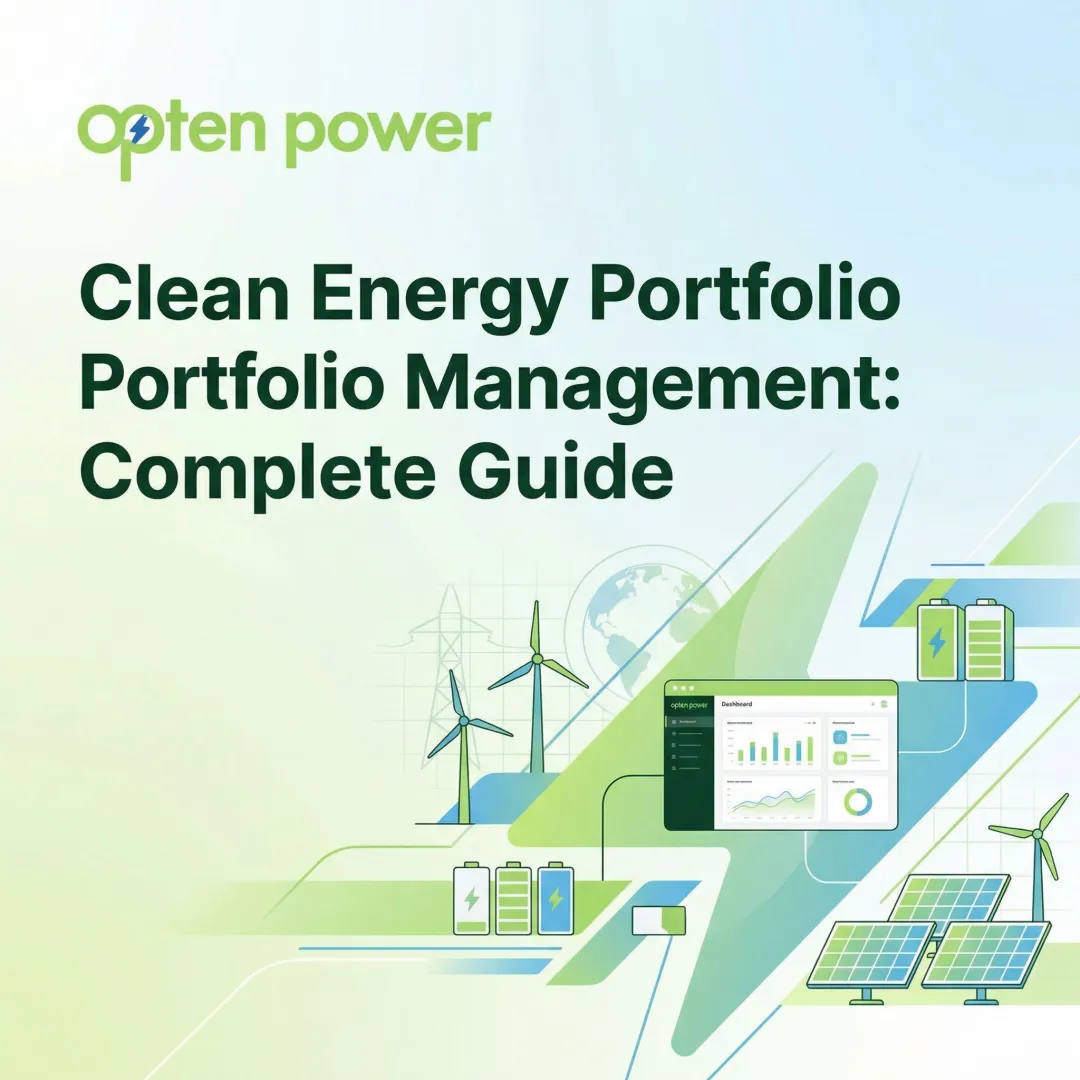
Opten Power's Portfolio Management Dashboard gives C&I businesses a single view across all their renewable energy investments — solar, wind, and hybrid — so maintenance, upgrade, and procurement decisions are grounded in complete, current data rather than fragmented reports.

Digital Twins and Lifecycle Simulation
Digital twin technology allows operators to create virtual models of physical energy assets, simulate degradation scenarios, test maintenance strategies, and model end-of-life timing — all without disrupting live operations.
Digital twin frameworks improve fault prediction accuracy up to 95% in simulation environments. Real-world deployments demonstrate up to a 25% reduction in downtime and 10–20% improvements in energy yield. GE's Digital Wind Farm technology boosts energy production by up to 20%, showing that virtual simulation translates directly into measurable output gains on operating assets.
Frequently Asked Questions
What are the stages of the energy asset lifecycle?
The six key stages are planning and design, procurement and construction, commissioning, operation and maintenance, upgrades and optimization, and decommissioning. Each stage requires distinct management practices to protect asset value and ensure long-term performance.
What are the 5 P's of asset management?
The 5 P's are People, Processes, Performance, Plant (or Physical Assets), and Planning. Each pillar supports structured decision-making across the lifecycle, keeping teams aligned from procurement through decommissioning.
What is the difference between energy asset management and energy asset lifecycle management?
Energy asset management covers ongoing monitoring, maintenance, and optimization of energy assets. Energy asset lifecycle management takes a broader end-to-end view — incorporating strategic decisions at every stage from procurement to decommissioning.
How does energy asset lifecycle management help reduce energy costs?
Predictive maintenance alone can reduce maintenance costs by 40% and extend asset life by 50%. By keeping assets at peak performance and timing upgrades strategically, lifecycle management ensures maximum energy yield at the lowest cost over the asset's operational life.
What tools are commonly used in energy asset lifecycle management?
Common tools include SCADA systems, CMMS software, IoT-based monitoring platforms, digital twins, and portfolio management dashboards. Integrated platforms that consolidate multi-site data are now the preferred choice over standalone point solutions.