Introduction
Commercial and industrial businesses across India face a compounding energy procurement problem: state-wise Discom variability creates unpredictable tariff structures, cross-subsidy surcharges shift without warning, and pressure to cut costs while meeting sustainability targets intensifies each quarter.
For enterprises managing multi-facility operations, traditional bilateral procurement — relying on known suppliers, negotiating without market benchmarks, tracking contracts across disconnected spreadsheets — has become unworkable at scale.
The real question is: what does digital procurement actually deliver? This article breaks down the specific, measurable advantages of digital marketplaces — covering cost transparency, procurement speed, portfolio control, and risk reduction — so CFOs, procurement teams, and sustainability leads can evaluate the business case clearly.
Key Takeaways
- Digital marketplaces consolidate supplier discovery, tariff comparison, contract management, and portfolio monitoring on one platform — replacing slow, disconnected negotiations
- Real-time price transparency prevents overpayment; automated workflows cut deal timelines by up to 50%
- Businesses using digital procurement close faster, secure more competitive tariffs, and gain control over multi-project portfolios
- Without one, buyers face opaque pricing, drawn-out negotiations, and reactive energy management — costs that compound every year
What Is a Digital Marketplace for Energy Procurement?
A digital energy procurement marketplace is a platform where commercial and industrial buyers discover suppliers, compare pricing and contract terms, run procurement processes, and manage their energy portfolio — all from one interface. It's built for businesses procuring power through:
- Open access arrangements across multiple state discoms
- Corporate PPAs with solar, wind, or hybrid developers
- Renewable energy contracts requiring financial modeling and regulatory analysis
The real value is market intelligence and process efficiency — giving buyers the tools to make smarter decisions, faster and at lower cost. For enterprises managing energy across multiple facilities or states, these platforms shift procurement from a reactive purchasing exercise into a structured, forward-looking strategy that compounds savings over time.
Key Advantages of Digital Marketplaces for Energy Procurement
The advantages below are grounded in operational and financial impact — each one maps to outcomes that procurement teams, CFOs, and sustainability leads are actively measured on: cost per unit, time-to-contract, regulatory compliance, and portfolio performance.
Price Transparency and True Market Access
In traditional procurement, buyers negotiate blind — no visibility into what others are paying or what competing developers are offering. Digital marketplaces expose real-time pricing across multiple suppliers simultaneously, creating competitive pressure that drives down tariffs.
What this looks like in practice:
The platform aggregates live tariffs, landing costs by state (including Discom-specific charges, wheeling fees, and banking charges), and PPA structures from multiple developers — giving buyers an apples-to-apples comparison they could not otherwise construct without weeks of manual outreach. Platforms like Opten Power offer Real-Time Discom Intelligence that standardizes landing prices across states, removing one of the most opaque variables in Indian energy procurement.
The financial case:
Organizations optimizing complex energy categories through digital procurement can save between 1 and 5 percent of total annual energy spend, according to McKinsey research. With real-time tariff comparison, businesses identify savings on per-unit cost, evaluate true landed cost of renewable energy versus grid tariff, and negotiate from an informed position rather than an assumed one.
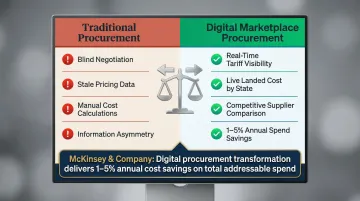
Price opacity has historically led to overpayment in India's industrial energy market. When buyers lack visibility into competing offers, developers have little incentive to sharpen pricing. Digital marketplaces reverse this dynamic by making pricing competition transparent and immediate.
KPIs impacted:
- Energy cost per unit (₹/kWh)
- Total annual energy spend
- Cost variance across facilities
- PPA discount rate versus grid tariff
- ROI on renewable procurement decisions
When this matters most:
This is highest-impact for multi-state operations where Discom charges vary significantly, for businesses comparing open access versus PPA options, and during tariff revision periods when real-time data prevents locking into unfavorable rates.
Procurement Speed and Process Automation
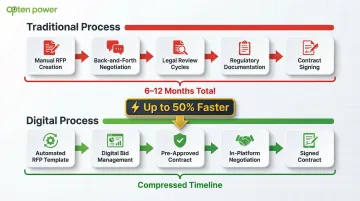
The time from decision to signed contract is one of energy procurement's most persistent friction points. In traditional bilateral processes, this can stretch to 6–12 months due to manual RFP creation, back-and-forth negotiation, legal review cycles, and regulatory documentation.
How digital marketplaces compress timelines:
Automated RFP creation using modular templates, pre-approved contract structures, digital bid management, and in-platform negotiation reduce the process to a structured, trackable workflow rather than an unstructured chain of emails and meetings. Advanced analytics tools in procurement present a 20 percent savings potential by identifying usage patterns and market anomalies, cutting decision cycles that used to take weeks.
Why speed translates to savings:
Faster procurement means earlier commissioning, earlier cost savings realization, and reduced exposure to tariff volatility during delay windows. Manual processes introduce errors in contract terms, missed regulatory filings, and version control issues on legal documents — automation eliminates these error categories at the source. Fifty percent of companies are planning to invest in Contract Lifecycle Management tools to save time, reduce costs, and improve regulatory compliance through standardized clauses.
KPIs impacted:
- Time-to-contract
- Number of procurement cycles completed per year
- Cost of procurement operations
- Contract error rate
- Days saved per tender cycle
When this matters most:
This is critical for businesses running multiple procurement cycles across different facilities or states, for companies with lean procurement teams managing high volumes of energy decisions, and during regulatory windows where timelines for commissioning or connectivity approvals are fixed.
Portfolio Visibility and Financial Control
Once a business has multiple renewable energy contracts, open access arrangements, or PPA agreements across different locations, managing performance, costs, and compliance becomes a portfolio management challenge — one that spreadsheets and disconnected systems cannot handle.
What a unified dashboard delivers:
A single interface tracks all active energy agreements, monitors generation and consumption data, flags contract milestones and renewal dates, and provides financial analytics including IRR, payback period, and savings-to-date. Opten Power's Portfolio Management Dashboard enables businesses to monitor all renewable energy investments from one place rather than managing each project in isolation.
From reactive management to active control:
Fragmented portfolio management leads to missed contract renewals, reactive decision-making, and inability to optimize across assets. When CFOs and energy managers have real-time IRR and payback data consolidated across all projects, they can make capital allocation and contract renewal decisions based on evidence rather than estimates. Digital platforms enable structured Supplier Relationship Management frameworks, tracking long-term supplier performance, project commissioning delays, and generation reliability — reducing execution risk before it compounds.
KPIs impacted:
- Portfolio-level energy cost
- IRR per project
- Payback period accuracy
- Compliance tracking rate
- Savings versus forecast
- Time spent on reporting
When this matters most:
This is most valuable for large enterprises and heavy industries running energy procurement across multiple facilities or states, for businesses with a mix of solar, wind, and hybrid contracts, and for teams accountable to sustainability or ESG reporting requirements.
What Happens When Energy Procurement Stays Offline
Businesses that continue with traditional, fragmented procurement rely on a small number of known suppliers, negotiate without market benchmarks, and accept contract terms they cannot efficiently compare — leading to persistent overpayment that compounds annually.
The operational drag compounds quickly. Common pain points include:
- Slow RFP cycles — manual document tracking and unstructured timelines delay deal closure
- Missed savings windows — without real-time Discom charges and competitor pricing, decisions rely on stale data
- Tariff exposure — gaps in regulatory intelligence lead to poor contract structures and avoidable cost overruns
- RPO compliance risk — reactive portfolio management makes it harder to meet sustainability targets on time
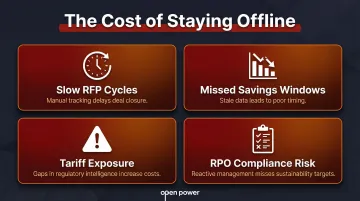
These inefficiencies are not one-time hits. Each procurement cycle without competitive market intelligence, each contract closed without benchmarking — the costs stack quietly and accumulate over the 15-to-25-year life of a PPA.
How to Get the Most Value from a Digital Energy Marketplace
The platform's value compounds when businesses move beyond using it as a one-time sourcing tool and treat it as an ongoing procurement and portfolio management system. Run RFPs regularly, review market pricing before contract renewals, and use portfolio data to inform capital investment decisions.
Build consistent processes inside the platform:
- Use templated RFPs consistently across all facilities and procurement cycles
- Set up automated alerts for contract milestones and tariff changes
- Ensure all active agreements are tracked centrally rather than maintained in parallel offline systems
Use historical data to sharpen each procurement cycle:
Procurement teams using digital platforms can use historical pricing data to lock in supply 12 to 24 months in advance when pricing is favorable. Data from the marketplace — supplier performance, pricing history, savings actuals versus forecast — should feed into procurement strategy reviews, making each subsequent cycle more informed than the last. Teams that do this consistently tend to negotiate from a stronger position with every renewal.
Use standardized contracts to close deals faster:
The Central Electricity Regulatory Commission explicitly recognizes that registered OTC platforms can standardize documentation and facilitate matchmaking for Virtual PPAs, providing regulatory endorsement for digital marketplace best practices. Standardized term sheets and RFP templates reduce transaction times and make deals more bankable by eliminating prolonged legal negotiation cycles.
Conclusion
Digital energy marketplaces create compounding value across three outcomes that matter most to procurement teams:
- Price transparency — real-time tariff visibility that eliminates overpayment at the point of decision
- Process automation — RFP workflows and pre-approved contracts that cut deal timelines in half
- Portfolio visibility — a unified dashboard that shifts energy management from reactive to proactive
Each of these benefits grows more significant as an organisation's energy procurement complexity increases.
Digital energy procurement is not a trend to monitor for future planning cycles. It is an operational decision with direct, measurable impact on cost and risk right now. Businesses that adopt it early build a structural cost advantage over those that wait — one that compounds through every contract renewal and every portfolio optimization decision.
Frequently Asked Questions
What is the difference between procurement and marketplace?
Procurement refers to the overall process of sourcing, negotiating, and contracting energy. A marketplace is the platform infrastructure that facilitates this process — connecting buyers with multiple suppliers, enabling comparison, and automating transactions in a single environment.
How is digitalisation beneficial for procurement management?
Digitalisation replaces manual, fragmented workflows with automated, data-driven processes — reducing time-to-contract, improving pricing visibility, and enabling real-time tracking of procurement status and portfolio performance. This systematically reduces costs and operational risks.
What is a digital marketplace?
A digital marketplace is a platform that aggregates supply and demand in one place, enabling buyers to discover suppliers, compare options, and transact. Energy-specific marketplaces add features like tariff intelligence, RFP automation, and compliance tracking tailored to the sector's complexity.
How do digital marketplaces help reduce energy procurement costs?
Digital marketplaces expose true landed costs — including Discom charges, wheeling fees, and banking charges — across multiple suppliers simultaneously. This competitive pressure drives down tariffs and eliminates the information asymmetry that causes overpayment in bilateral negotiations.
What should businesses look for in an energy procurement marketplace?
Key criteria to evaluate:
- Real-time pricing intelligence across states
- Automated RFP creation and contract management
- Depth and verification of the supplier network
- Integrated financial modeling (IRR, payback period)
- Portfolio dashboard for visibility across all active contracts
Are digital energy marketplaces suitable for large industrial consumers?
Large C&I consumers — heavy industries, data centers, manufacturing plants — are the primary beneficiaries. Multi-location procurement, state-wise regulatory variation, and portfolio management at scale are exactly what these platforms are built to handle.