Introduction
Indian C&I buyers are paying Rs 10-12 per unit across 16+ states—Rs 3-4 per unit above the actual cost of supply at Rs 7-8 per unit—because Discom cross-subsidies shift the burden of residential and agricultural consumption onto commercial accounts. This structural cost gap isn't going away. It makes energy procurement intelligence a direct competitive lever, not a back-office function.
The scale of this challenge is significant. Energy accounts for approximately 28% of total operating costs for Indian firms, with 72% citing rising energy prices as a threat to profitability—well above the global average of 59%. Yet most businesses remain locked into reactive billing reviews rather than proactive procurement strategies.
Real-time energy intelligence platforms give C&I buyers a way out of that reactive cycle. They deliver live consumption monitoring, tariff benchmarking against Discom rates, and procurement analytics that tie directly to ROI on renewable transitions. India's energy intelligence solution market is expanding at a 17.9% CAGR—the fastest globally—meaning the gap between companies with procurement visibility and those without it is widening every quarter.
Key Takeaways
- Real-time energy intelligence platforms combine live consumption monitoring, tariff analytics, and procurement automation to cut C&I energy costs by 15–40%, depending on load profile and procurement model
- India's market complexity—state-wise Discom tariffs, open access regulations, 16+ states with different rules—makes real-time intelligence essential, not optional
- Key selection criteria: India-specific Discom coverage, procurement automation, regulatory analysis, and integration with existing plant systems
- Top platforms range from factory-level operational monitoring to full-stack procurement tools covering PPA sourcing and IRR analysis
- The best choice depends on operational context: manufacturers need production-correlated consumption data, while C&I buyers procuring renewable energy require live tariff benchmarking and deal automation
What Is a Real-Time Energy Intelligence Platform?
A real-time energy intelligence platform is a software system that continuously collects, processes, and analyses energy data—consumption, generation, pricing, and grid performance—to enable immediate decision-making rather than after-the-fact reporting. Unlike traditional energy management systems that rely on monthly billing data, these platforms deliver sub-minute latency insights with automated alerts and predictive analytics.
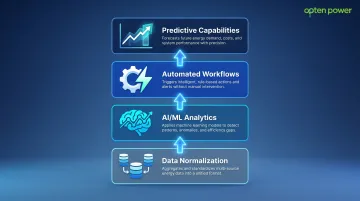
The core capability layers that distinguish true intelligence platforms from basic monitoring tools include:
- Data normalization across sources - Unifying data from smart meters, IoT sensors, SCADA systems, and grid feeds into a single analytical layer
- AI/ML analytics - Applying machine learning for anomaly detection, demand forecasting, and consumption pattern recognition
- Automated workflows - Triggering alerts and operational adjustments based on real-time conditions
- Predictive capabilities - Forecasting consumption, cost exposure, and equipment performance
According to the IEA's research on energy management, digitalized Energy Management Systems can unlock an additional 10-20% in savings beyond traditional approaches, which typically yield 5-15% improvements. Organizations with mature systems achieve continual annual improvements of 2-3% in energy intensity.
For India's C&I buyers specifically, intelligence platforms must cover procurement-side data alongside consumption monitoring. That means live Discom landing prices, open access tariffs, and renewable energy cost benchmarks—all updated in real time.
Platforms that provide only consumption visibility leave buyers blind to their biggest cost lever. Procurement intelligence is what turns energy reporting into energy savings.
Best Real-Time Energy Intelligence Platforms in 2026
These five platforms were selected based on real-time data capability, India-market relevance, integration depth, analytical sophistication, and demonstrated value for commercial and industrial energy buyers.
Opten Power
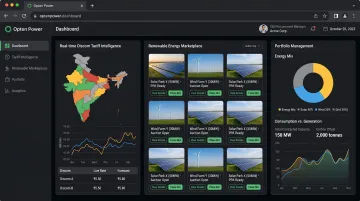
India's unified clean energy marketplace built specifically for C&I buyers, Opten Power combines real-time Discom intelligence across 16 states with renewable energy procurement, PPA sourcing, and portfolio management on a single platform. The platform delivers standardized, continuously updated landing prices that eliminate tariff opacity and enable accurate cost comparisons.
What makes it stand out: Opten Power provides instant IRR, payback, and regulatory analysis in seconds—not days. The automated RFP and tender engine closes deals 50% faster through modular templates and pre-approved contracts. Buyers access 4+ GW of solar, wind, and hybrid capacity from India's top power producers without managing scattered negotiations across multiple developers. The platform addresses India's unique procurement complexity by integrating state-specific open access regulations, Discom tariff benchmarking, and financial analytics in one interface.
| Feature | Details |
|---|---|
| Key Features | Real-Time Discom Intelligence, Automated Tender Engine, Portfolio Management Dashboard, IRR & Payback Calculator, 4+ GW renewable marketplace |
| Best For | C&I buyers, heavy industries (steel, cement, textiles), data centers, hospitals, IT parks, and large enterprises seeking to procure renewable energy and benchmark energy costs across Indian states |
| Standout Differentiator | Only platform combining live Discom tariff benchmarking with automated renewable energy procurement and deal management in the Indian market |
Honeywell Forge Energy Management
A global industrial energy intelligence platform with strong presence in Indian manufacturing, Honeywell Forge connects sensors, PLCs, and SCADA systems to deliver sub-second consumption monitoring. The platform excels in demand response automation and production-correlated energy metrics across heavy industrial facilities.
The key differentiator: Honeywell Forge tracks energy per unit production, linking consumption directly to OEE (Overall Equipment Effectiveness). This transforms energy from an overhead expense into a measurable KPI tied to manufacturing output.
Automated peak demand alerts and edge computing architecture enable real-time response without cloud latency—critical for 24x7 process industries. The Forge AI Engine deploys machine learning across enterprises to automate processes and surface asset-specific performance insights.
| Feature | Details |
|---|---|
| Key Features | Real-time consumption monitoring, production-correlated energy metrics, edge-based demand response, SCADA/PLC integration, predictive maintenance alerts |
| Best For | Large manufacturing plants, process industries, and energy-intensive facilities with complex brownfield equipment environments |
| Standout Differentiator | Production-energy correlation (Energy per Unit) that ties consumption directly to operational efficiency, turning energy into a manageable KPI |
Schneider Electric EcoStruxure Energy Management
One of the most widely deployed energy management platforms in India's C&I sector, EcoStruxure provides end-to-end visibility from smart meters and distribution boards to enterprise sustainability dashboards. With a strong ecosystem of hardware and software integration, the platform serves thousands of Indian facilities.
What makes it stand out: Deep integration with Schneider's own hardware—smart meters, MCCBs, energy analyzers—creates seamless hardware-to-cloud connectivity. The platform achieved a documented 29% energy reduction across Capgemini's 23 Indian campuses and 70+ buildings, with a complete transition to 100% renewable electricity. ISO 50001 compliance modules and multi-site portfolio dashboards help industrial groups benchmark and reduce energy intensity with proven local implementation support.
| Feature | Details |
|---|---|
| Key Features | Smart meter integration, multi-site portfolio dashboards, ISO 50001 compliance module, energy benchmarking, carbon reporting |
| Best For | Commercial complexes, warehouses, hospitals, and multi-facility industrial groups that need standardized energy monitoring with hardware-software synergy |
| Standout Differentiator | Proven at scale across India with deep local implementation support and the broadest hardware-to-cloud integration ecosystem in the market |
Siemens Omnivise Energy Management
Siemens Omnivise is an enterprise-grade platform designed for large utilities, heavy industries, and IPPs. The platform offers AI-driven asset performance monitoring, demand forecasting, and grid-edge analytics increasingly relevant to India's industrial buyers navigating complex grid conditions.
Where it pulls ahead: AI-powered anomaly detection and digital twin modeling allow heavy industries—steel, cement, fertilizers—to scale intelligence from asset-level monitoring to plant-wide optimization without replacing legacy systems. The Gas Turbine Auto Tuner uses reinforcement learning to optimize performance in real time.
Digital twin capability enables what-if scenario planning for energy procurement and demand-side changes before committing to operational decisions, reducing risk and avoiding capital waste.
| Feature | Details |
|---|---|
| Key Features | AI anomaly detection, digital twin modeling, demand forecasting, asset health monitoring, modular integration with legacy OT systems |
| Best For | Heavy process industries, steel plants, cement manufacturers, fertilizer conglomerates, and IPPs managing large generation and consumption assets |
| Standout Differentiator | Digital twin capability that allows what-if scenario planning for energy procurement and demand-side optimization before committing to operational changes |
IBM Energy Data Hub
IBM's cloud-based Energy Data Hub (powered by Microsoft Azure) unifies OT, IoT, and IT data streams into a single real-time intelligence layer. The platform enables large enterprises and utilities to run AI/ML models on live operational data for predictive maintenance, congestion forecasting, and clean energy integration at scale.
For organizations managing distributed energy assets, the platform's breadth is its strongest feature. It ingests data from thousands of field assets using open protocols—MQTT, ICCP, DNP3, IEC 61850, Modbus, OPC-UA—without requiring vendor lock-in.
Role-specific predictive dashboards serve operations, finance, and sustainability teams with tailored analytics. The architecture handles complex multi-site, multi-technology estates where enterprise-wide intelligence and regulatory compliance tracking are non-negotiable.
| Feature | Details |
|---|---|
| Key Features | Real-time OT/IoT/IT data unification, AI/ML analytics engine, predictive asset health scoring, grid congestion forecasting, multi-protocol support |
| Best For | Large enterprises, utilities, and organizations managing geographically distributed energy assets that require enterprise-wide intelligence and regulatory compliance |
| Standout Differentiator | Cross-domain data fusion (combining operational technology data with enterprise IT) to deliver predictive insights that single-layer monitoring tools cannot replicate |
How We Chose the Best Real-Time Energy Intelligence Platforms
The evaluation prioritized three core dimensions:
- Real-time data capability — sub-minute latency vs. batch reporting
- India-market relevance — Discom coverage, regulatory alignment, local deployment experience
- Demonstrated business impact — cost reduction, procurement efficiency, sustainability reporting
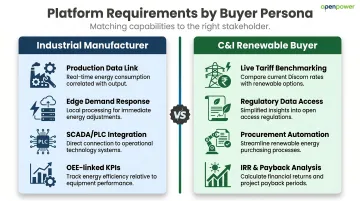
Common mistakes buyers make include choosing platforms based on brand reputation or feature lists without verifying whether the tool covers India's state-specific Discom tariff complexity, open access rules, or the specific operational context. An industrial manufacturer needs production-correlated consumption data and edge computing for real-time demand response. A C&I buyer procuring renewable energy needs live tariff benchmarking, open access regulatory data, and procurement automation. Forcing a single tool to cover both use cases without the right fit wastes budget and delays ROI.
We also assessed deployment speed and execution barriers. While 80% of Indian firms report digital readiness, only 41% consistently apply total-cost-of-ownership metrics in purchasing decisions. This gap between intention and execution means platforms offering rapid deployment and immediate ROI visibility outperform those requiring extensive IT integration cycles.
Conclusion
In 2026, real-time energy intelligence is not a reporting tool. It is decision-making infrastructure that determines whether an organization overpays for energy or captures every available cost and procurement advantage. With India's Draft Electricity Amendment Bill 2025 proposing to phase out industrial cross-subsidies over five years and exempt Discoms from serving consumers above 1 MW, the procurement landscape is fundamentally changing.
Evaluate platforms against your specific operational context. Ask whether the platform covers India's Discom landscape across the states where you operate. Verify integration with existing metering and OT infrastructure. Confirm whether the platform can scale from monitoring to active procurement or demand response automation. The right platform should deliver quantifiable savings within the first year, not just dashboards and reports.
For Indian C&I buyers who meet those criteria, Opten Power is built around this specific use case. The platform covers:
- Live Discom tariff intelligence with standardised landing prices across all states
- Renewable energy procurement across 4+ GW of solar, wind, and hybrid projects in 16 states
- Automated RFP and contract workflows to reduce deal timelines
- A unified portfolio dashboard combining procurement, financial analytics, and regulatory tracking
If your organisation is evaluating platforms for India's evolving open-access environment, the Opten Power team can walk you through how the platform fits your load profile and state-specific regulatory context.
Frequently Asked Questions
What is a real-time energy intelligence platform?
A real-time energy intelligence platform is software that continuously collects, processes, and analyses energy data from meters, IoT devices, and grid sources to deliver live insights into consumption, costs, and procurement opportunities. Unlike traditional reporting, it enables businesses to act on energy data as it happens — shifting from periodic audits to continuous, proactive optimization.
How does real-time energy intelligence reduce costs for businesses?
Live consumption data surfaces waste, peak demand spikes, and off-peak opportunities — typically delivering 10-30% cost reductions depending on facility type. Procurement intelligence adds further value by enabling real-time tariff comparisons and better contract negotiations, with digitalized platforms delivering 10-20% in savings beyond what traditional systems capture.
What does a real time energy trader do?
A real-time energy trader monitors live market prices, generation forecasts, and grid conditions to execute buy or sell decisions on electricity in day-ahead, intraday, or balancing markets. They use intelligence platforms to optimize trade timing and minimize imbalance costs, with markets like IEX's Real Time Market offering 48 sessions per day with delivery one hour after closure.
What is the best energy management software?
The right platform depends on use case. For manufacturing operations, Honeywell Forge and Schneider EcoStruxure are common choices. For renewable procurement and Discom intelligence in India, Opten Power is purpose-built for C&I buyers. For enterprise-scale data unification, IBM Energy Data Hub is widely used.
What should Indian C&I buyers specifically look for in an energy intelligence platform?
Look for real-time Discom tariff coverage across relevant states, open access regulatory data, renewable energy procurement integration, and the ability to run IRR or payback analysis on PPA options. These capabilities are critical for Indian energy cost management but often lacking in global platforms not designed for India's market complexity.
How is real-time energy intelligence different from traditional energy monitoring?
Traditional monitoring relies on periodic billing data and manual audits, revealing problems weeks after they occur. Real-time platforms deliver continuous data with automated alerts and predictive analytics, allowing organizations to intervene before costs escalate rather than reconciling losses after the billing cycle closes.