Introduction
India's renewable energy ambition is accelerating at an unprecedented pace. In 2025 alone, the country added a record 7.8 GW of commercial and industrial (C&I) solar open access capacity, pushing cumulative C&I installations past the 30 GW mark. Yet despite this surge, most businesses struggle not with the intent to go green, but with the procurement process itself.
Fragmented markets, opaque pricing structures, and complex state-level regulations create a significant execution gap. India operates under 16+ distinct state regulatory regimes, each with its own open access charges, banking rules, and wheeling costs. What works in Gujarat may be loss-making in Karnataka.
Slow contracting cycles, developer vetting challenges, and the lack of standardised market intelligence compound the problem — making procurement the single biggest barrier to scaling renewable energy adoption.
This guide walks through four proven strategies to help procurement leads, energy managers, and enterprise decision-makers compress timelines, reduce costs, and build resilient energy portfolios:
- Conducting baseline energy assessments
- Using competitive market intelligence
- Structuring contracts to protect long-term value
- Diversifying supply sources across developers and geographies
Key Takeaways
- Start with a baseline energy assessment to match load profiles with the right technology and avoid costly mismatches
- Compare multiple developers using real-time market intelligence — pricing opacity is one of the most expensive problems in procurement
- Focus on contract structure, not just price—PPA type, risk clauses, and term length determine long-term value
- Spread risk across solar, wind, and hybrid technologies to guard against supply disruptions and DISCOM unpredictability
Why Renewable Energy Procurement Is More Complex Than It Looks
The Multi-Stakeholder Maze
Renewable energy procurement in India isn't a simple contract signing. It's a navigation exercise through a multi-stakeholder maze involving DISCOM regulations, state-level open access policies, central and state approvals, third-party developer negotiations, and variable banking and wheeling charges.
Each state sets its own rules. The Green Energy Open Access (GEOA) Rules, 2022 reduced the eligibility threshold from 1 MW to 100 kW, opening access to smaller consumers. But implementation remains inconsistent. DISCOM resistance manifests through delayed No Objection Certificates (NOCs) and procedural bottlenecks, especially in states reluctant to lose high-paying C&I customers.
State-level regulatory fragmentation is acute:
- Karnataka's High Court struck down central GEOA rules in early 2025, forcing the state to draft new regulations
- Maharashtra restricts banked power withdrawal during peak Time-of-Day (ToD) hours
- Gujarat applies daily banking for solar but monthly for wind and hybrid
- Rajasthan uses annual banking cycles with 10% banking charges
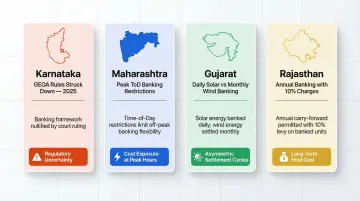
This regulatory patchwork means a procurement strategy optimised for one state may be financially unviable in another.
Pricing Opacity and the Landing Tariff Problem
Most C&I buyers lack standardised visibility into landing tariffs across states. Without real-time data on DISCOM charges, open access fees, and transmission costs, buyers are vulnerable to developer markups and poorly informed negotiations.
Cross-Subsidy Surcharge (CSS) and Additional Surcharge (AS) now average ₹2.25 per unit across states, but rates vary dramatically. Tamil Nadu, Maharashtra, and Gujarat levy these charges upfront—even for captive projects theoretically exempt under the Electricity Act—consuming 70-80% of project revenue and creating severe cash-flow strain.
Buyers need state-specific intelligence to calculate true landed costs. Platforms like Opten Power address this gap with real-time DISCOM intelligence across 16 states, giving buyers accurate cost comparisons and clear visibility into what they'll actually pay before signing anything.
Global Supply Chain Pressures
Import duties and domestic sourcing mandates have tightened equipment availability across the board. India's Basic Customs Duty (BCD) on solar modules — recently reduced from 40% to 20% in the 2025 Budget — combined with the Approved List of Models and Manufacturers (ALMM) requirement, restricts procurement to locally produced panels.
This creates a genuine supply crunch. Open access developers compete directly with utility-scale DISCOM projects for limited domestic inventory, pushing costs up and delivery timelines out. Wind projects face parallel pressures through domestic sourcing mandates covering blades, towers, and gearboxes. Buyers who don't factor in equipment lead times and sourcing risks at the procurement stage are exposed to delays and cost overruns before construction even begins.
Strategy 1: Define Your Energy Goals and Conduct a Baseline Assessment
Load Profiling: The Foundation of Smart Procurement
Before evaluating any PPA or developer proposal, map your actual consumption patterns. Are you a 24x7 industrial operation with consistent base load, or a commercial facility with daytime peaks? Do you experience seasonal demand variations?
Load profiling prevents costly mismatches:
- Over-contracting ties up capital in unused capacity
- Under-contracting forces reliance on expensive grid power during shortfalls
- Misaligned technology selection (solar for nighttime loads) creates structural inefficiencies
Your load profile should directly inform technology selection. A steel plant operating around the clock needs different energy sources than a daytime-only commercial complex.
Set Clear, Measurable Procurement Objectives
Define specific goals before entering negotiations:
- Reduce per-unit energy cost by a defined percentage (X%)
- Offset a specific volume of CO₂ (Y tonnes annually)
- Source a fixed share of consumption from renewables (Z%)
Clear objectives prevent scope creep and give procurement teams a benchmark beyond the lowest quoted tariff — ensuring total landed cost and risk allocation stay in the picture.
Technology Matching: Aligning Source with Load
Solar works best for:
- Manufacturing units and warehouses with predictable daytime generation
- Operations with peak consumption between 11am–4pm
- Operations targeting payback periods of 3–4 years
- Typical capacity utilisation: 16–20%
Wind is better suited to operations that need power around the clock:
- Heavy industries with 24x7 operations (steel, cement, textiles)
- Facilities needing base load power, particularly during late night and monsoon seasons
- Projects >5MW in wind-rich states
- Typical capacity utilisation: 20–26%
Where neither solar nor wind alone covers demand, hybrid configurations close the gap:
- Round-the-clock energy coverage for hospitals, data centers, and process industries
- Capacity utilisation of 35–50%, roughly double that of standalone solar
- 75–80% of C&I demand met, versus 40–50% from solar alone
- Protection against ToD banking restrictions
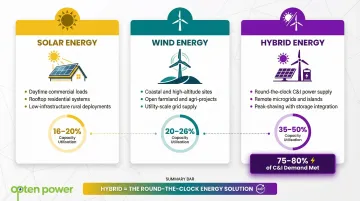
This matters especially in states like Maharashtra and Haryana, where regulators restrict banked solar withdrawal during peak hours. For continuous manufacturing operations, solar-only PPAs carry real viability risk — hybrid projects reduce that exposure by aligning generation more closely with consumption.
Strategy 2: Use Competitive Market Intelligence for Smarter Sourcing
Why Single-Developer Procurement Is a Structural Disadvantage
Bilateral negotiations with a single developer eliminate your leverage. Without multiple offers, you lack:
- Pricing benchmarks to validate quoted tariffs
- Visibility into what's available in the market
- Negotiating power to improve terms
Competitive tendering reduces procurement costs significantly compared to bilateral negotiations. Multi-developer comparison forces transparency and enables true price discovery — and that discovery depends entirely on the quality of market data you bring into the process.
What Real-Time Market Intelligence Means in Practice
For renewable energy buyers, market intelligence means access to:
- Up-to-date DISCOM landing prices across states
- Current open access charges (wheeling, transmission, banking)
- State-specific banking regulations and ToD restrictions
- Transmission cost structures
This data is what separates a well-negotiated PPA from one that leaves value on the table. Without it, buyers are essentially accepting whatever terms a developer offers — with no way to verify whether the tariff is competitive, the open access costs are accurate, or the contract structure reflects current market conditions.