Introduction
Tamil Nadu is home to some of India's most energy-intensive industries — textiles, steel, cement, IT parks, and data centres — all of which now face stricter mandatory renewable energy obligations. In October 2025, the Tamil Nadu Electricity Regulatory Commission (TNERC) issued an amendment to the state's Renewable Energy Purchase Obligation (RPO) framework, superseding all earlier regulations with category-specific compliance targets.
For Commercial and Industrial (C&I) businesses operating under open access or captive generation, this goes well beyond routine adjustments. The revised framework introduces hard commissioning-date cutoffs, sub-category tracking, and explicit penalties for shortfalls.
This article explains what changed, who is affected, the category-wise targets and timelines, how compliance is measured, and what C&I businesses must do now to avoid penalties and maintain regulatory standing.
TLDR: Key Takeaways
- TNERC's October 2025 amendment replaced all prior RPO notifications with structured, sub-category-specific targets aligned with national RCO norms
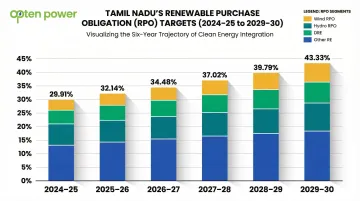
- Total RPO obligation rises from 29.91% in 2024–25 to 43.33% by 2029–30, with distinct sub-targets for wind, hydro, hybrid, DRE, and other renewables
- Wind targets scale from 0.67% (2024–25) to 3.48% (2029–30), covering only projects commissioned after 31 March 2024
- DRE compliance counts only projects below 10 MW, including rooftop solar under net and gross metering
- Non-compliance with any sub-target is explicitly subject to regulatory penalties
What Is RPO and Who Does It Apply to in Tamil Nadu?
Renewable Purchase Obligation (RPO) is a regulatory mandate established under the Electricity Act, 2003, requiring specified entities to source a minimum percentage of their total energy consumption from renewable sources. The mandate aligns with national RPO targets set by the Ministry of Power and is enforced by state electricity regulatory commissions.
Obligated entities in Tamil Nadu include:
- Distribution licensees, such as TNPDCL
- Open access consumers — C&I businesses procuring power outside the DISCOM network
- Captive power users generating their own electricity on-site
For C&I businesses drawing power through captive generation or open access, compliance is a direct responsibility, not delegated to the DISCOM. Large manufacturers, IT parks, commercial complexes, and industrial facilities carry this obligation directly.
Tamil Nadu's renewable energy targets are moving fast. The state aims to raise renewables from 30% to 50% of total energy by 2030, while the Central Electricity Authority projects peak demand will nearly double to 35,507 MW by 2034–35. Both trends explain why RPO targets are rising sharply and enforcement is tightening.
TNERC's 2025 RPO Revision: What's Changed
The TNERC (Renewable Energy Purchase Obligation) (Amendment) Regulations, 2025, notified in October 2025 and effective from April 2024, supersede all earlier RPO notifications. The amendment is a complete re-notification — restructuring the compliance framework and requiring obligated entities to rethink how they plan and procure renewable energy.
Structural Changes: Sub-Category Disaggregation
The most significant structural change is the disaggregation of renewable obligation into distinct sub-categories: wind, hydro, hybrid, DRE (Distributed Renewable Energy), and other renewables. Earlier frameworks used a more aggregated approach, which allowed entities to meet total RPO targets through any renewable mix. The new framework creates specific compliance tracks for each energy type, giving TNERC clearer visibility into each energy type's compliance status.
The 43.33% Trajectory and Projected Shortfalls
Total RPO rises from 29.91% in 2024–25 to 43.33% by 2029–30. TNPDCL, the state utility, has projected significant compliance shortfalls: approximately 8,116 million units (MU) in 2025–26 and 10,392 MU in 2026–27. To address these gaps, TNERC approved TNPDCL's procurement of 270 MW of Firm and Dispatchable Renewable Energy (FDRE) from SECI at discovered tariffs of ₹5.06–5.07/kWh for 25 years.
Integration with Grid Code 2026
The revised RPO regulations interact closely with Tamil Nadu's Grid Code 2026. The Grid Code mandates:
- Real-time data communication between generators and the grid
- Day-ahead forecasting and strict scheduling for renewable integration
- PPA provisions covering Deviation Settlement Mechanism (DSM) penalties
In practice, this means C&I entities procuring renewable energy need to verify DSM compliance terms before signing any agreement.
Explicit Penalty Framework
Any shortfall from any prescribed sub-target is now explicitly classified as non-compliance and subject to penalties under Section 142 of the Electricity Act, 2003, or Section 26 of the Energy Conservation Act, 2001. This is a tougher enforcement signal compared to earlier ambiguity around penalty application.
Breaking Down Tamil Nadu's RPO Targets by Category
Wind Energy Targets
Wind energy targets start at 0.67% for 2024–25 and scale to 3.48% by 2029–30. Only energy from Wind Power Projects (WPPs) commissioned after 31 March 2024 qualifies toward wind RPO compliance. Older wind capacity does not count — entities must procure from newly commissioned projects or sign fresh PPAs with post-March 2024 capacity.
Wind-Hydro Offsetting Flexibility
The framework allows cross-compensation between wind and hydro categories:
- A wind shortfall can be offset using surplus hydro renewable energy, and vice versa
- Excess generation in either category can be credited toward the other for the same year
- Entities managing mixed renewable portfolios can use this flexibility to smooth year-on-year compliance
Hybrid and Other Renewable Energy Targets
The revised framework introduces hybrid renewable energy as a distinct compliance category. Hybrid projects — co-located solar and wind installations — allow for better capacity utilization and grid stability, combining solar's daytime peak generation with wind's nighttime output.
RPO trajectory by financial year:
| Financial Year | Wind RPO | Hydro RPO | DRE RPO | Other RE | Total RPO |
|---|---|---|---|---|---|
| 2024–25 | 0.67% | 0.38% | 1.50% | 27.35% | 29.91% |
| 2025–26 | 1.45% | 1.22% | 2.10% | 28.24% | 33.01% |
| 2026–27 | 1.97% | 1.34% | 2.70% | 29.94% | 35.95% |
| 2027–28 | 2.45% | 1.42% | 3.30% | 31.64% | 38.81% |
| 2028–29 | 2.95% | 1.42% | 3.90% | 33.10% | 41.36% |
| 2029–30 | 3.48% | 1.33% | 4.50% | 34.02% | 43.33% |
The "Other Renewable Energy" category captures generation from sources not separately classified, including standard utility-scale solar, small hydro, and biomass. Wind and hydro projects commissioned before 31 March 2024 also fall under this category.
Distributed Renewable Energy (DRE) Targets
DRE compliance must be sourced exclusively from projects below 10 MW capacity, including solar installations under net metering, gross metering, and other configurations notified by TNERC. In practice, rooftop solar and small commercial solar installations are the primary qualifying sources.
DRE targets scale from 1.50% in 2024–25 to 4.50% by 2029–30. For C&I consumers, on-site or near-site rooftop solar installations now serve a dual purpose: reducing electricity costs while directly counting toward DRE compliance.
Compliance Measurement, Offsetting Rules, and Penalties
How Compliance Is Measured
RPO compliance is measured in energy units (kWh). For designated consumers under the Energy Conservation Act, 2001, where generation data is unavailable, installed capacity (in kW) is converted to energy using a multiplier of 4 kWh per kW per day. The same multiplier applies for multiple prosumer DRE installations within a distribution licensee's area when generation data is missing.
This matters because businesses without smart metering or incomplete data will be assessed on this proxy basis, making documentation and metering infrastructure critical for accurate compliance reporting.
Strategic Offsetting Flexibility
The revised framework builds flexibility into sub-target management. Where one category runs short, surplus from another can cover the gap:
- Wind-Hydro offsetting: Shortfalls in wind can be offset by surplus hydro, and vice versa
- Other RE offsetting: Excess energy under "Other Renewable Energy" can be used to meet shortfalls in wind or hydro RPO targets
For C&I buyers facing high procurement costs for wind or hydro capacity, this means over-procuring lower-cost solar can legally satisfy shortfalls in those sub-targets — reducing overall compliance costs without adding complexity.
Renewable Energy Certificates (RECs)
Where physical renewable energy procurement falls short, obligated entities can meet RPO targets by purchasing Renewable Energy Certificates (RECs) issued under the CERC REC Regulations, 2022. RECs give buyers a market-based route to compliance without requiring direct project procurement.
Penalty Mechanism
Under Regulation 9, failure to comply with RPO targets or purchase RECs renders the obligated entity liable for penalties under Section 142 of the Electricity Act, 2003, or Section 26 of the Energy Conservation Act, 2001. The regulatory framework explicitly treats any shortfall as non-compliance.
Compliance Reporting Obligations
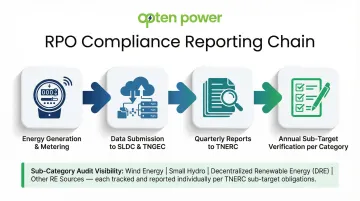
The State Agency (Tamil Nadu SLDC) and Tamil Nadu Green Energy Corporation (TNGEC) maintain renewable energy utilization data for all obligated entities and submit quarterly reports to TNERC.
On the entity side, annual compliance reports must demonstrate fulfilment against each sub-target individually. The sub-category structure strengthens audit trails — regulators can pinpoint exactly which component an entity is deficient in, rather than reviewing aggregate figures.
How C&I Businesses in Tamil Nadu Can Stay Compliant
With RPO targets rising to 43.33% by 2029–30, proactive procurement is preferable to annual spot purchases or penalty payments. Here are the primary compliance pathways:
1. Long-term Corporate PPAs
Long-term Power Purchase Agreements (typically 10–25 years) directly with wind, solar, or hybrid developers lock in both price certainty and RPO compliance throughout the contract term. These agreements hedge against electricity price volatility and secure renewable energy at fixed tariffs.
2. Procurement through SECI or State Tenders
State-approved procurement programs for FDRE or round-the-clock renewable power offer structured compliance pathways. TNERC's approval of 270 MW FDRE procurement at ₹5.06–5.07/kWh establishes a benchmark for firm green power costs in Tamil Nadu.
3. On-Site Captive Renewable Installations
Particularly relevant for DRE compliance, rooftop solar and small commercial solar installations below 10 MW can directly satisfy the DRE sub-target. Businesses can install solar on their premises under net metering or gross metering arrangements.
4. Purchase of RECs for Residual Gaps
For residual compliance gaps or difficult-to-source categories, RECs provide a flexible compliance tool, though they do not provide the same long-term price certainty as physical PPAs.
Before selecting a pathway, one category warrants close attention.
Mind the Wind RPO Eligibility Gap
Tamil Nadu's wind RPO specifically requires WPPs commissioned post March 2024. Businesses need to evaluate their existing PPA portfolios and identify whether their current contracts contribute to wind RPO compliance or fall outside the eligible window. Many captive users with legacy wind PPAs may face this compliance gap.
How Opten Power Can Help
Opten Power gives C&I businesses in Tamil Nadu access to 4+ GW of renewable capacity across solar, wind, and hybrid projects in 16 states. The platform is built to handle multi-category RPO compliance under the new TNERC framework:
- Compare developer tariffs across technologies in real time
- Run IRR, payback period, and regulatory impact analysis instantly
- Issue and manage RFPs using automated templates — closing deals up to 50% faster
- Track compliance position across all renewable energy investments from a single dashboard
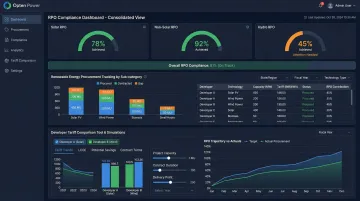
For businesses juggling wind eligibility windows, DRE sub-targets, and rising annual RPO percentages, that consolidated visibility is what turns compliance from a recurring fire drill into a managed process.
Frequently Asked Questions
What is the renewable policy of Tamil Nadu?
Tamil Nadu's renewable energy policy is governed by TNERC and targets increasing renewable energy's share from 30% to 50% of installed capacity by 2030. This is supported by mandatory RPO targets, grid code updates, and large-scale procurement programmes for solar, wind, and hybrid energy.
What is a renewable purchase obligation in India?
RPO is a regulatory mandate under the Electricity Act, 2003 requiring distribution companies, open access consumers, and captive users to source a specified percentage of their total electricity consumption from renewable energy. Targets are set by state electricity regulatory commissions in alignment with national norms.
How do long-term PPAs help businesses meet RPO obligations in Tamil Nadu?
A long-term PPA (typically 10–25 years) locks in the price and volume of renewable power between a generator and a buyer. C&I businesses in Tamil Nadu use these contracts to meet RPO obligations cost-effectively while protecting against grid tariff increases.
Who is obligated to meet RPO targets in Tamil Nadu?
Obligated entities under TNERC's RPO framework include distribution licensees (DISCOMs like TNPDCL), open access consumers, and captive power users. This means large C&I businesses with captive generation or open access arrangements must track and demonstrate their own RPO compliance directly.
What are the penalties for non-compliance with Tamil Nadu's revised RPO?
Under TNERC RPO Regulations, 2025, shortfalls against any sub-target — wind, hydro, hybrid, or DRE — constitute non-compliance. Penalties apply under Section 142 of the Electricity Act, 2003, or Section 26 of the Energy Conservation Act, 2001.
What is Distributed Renewable Energy (DRE) under the revised Tamil Nadu RPO?
DRE refers to renewable energy from projects below 10 MW capacity, including rooftop solar under net metering and gross metering schemes. Businesses can use on-site solar installations to fulfil this specific RPO sub-target.