Introduction
Commercial and industrial businesses in India face a severe energy cost challenge. Grid tariffs from state DISCOMs frequently range between ₹7–10 per unit for industrial consumers, placing significant pressure on operational margins. Meanwhile, solar PPA rates have become substantially more competitive, often falling below ₹4 per unit in favorable conditions.
Solar PPAs now give large energy consumers — manufacturing units, data centers, hospitals, IT parks — access to clean energy with zero upfront capital. The right developer and financing structure can reduce energy costs by up to 40%, delivering immediate cost savings while decarbonizing operations.
This article covers:
- The top solar PPA companies in India for 2026
- Key financing structures available to C&I buyers
- The criteria that should guide your procurement decision
Key Takeaways
- Solar PPAs enable C&I businesses to consume renewable energy with zero upfront capital while locking in long-term tariff stability below grid rates
- India's top PPA developers — ReNew Power, Adani Green Energy, Greenko Group, Azure Power, and Amp Energy — serve distinct industrial profiles with different strengths
- Key financing structures include third-party PPAs, captive models, and group captive arrangements, each with different regulatory and cost implications
- Opten Power lets businesses compare developers on live tariffs, IRR, and payback across 16 states — cutting procurement time by 50%
What is a Solar PPA and Why It Matters for Indian C&I Consumers
A Solar Power Purchase Agreement (PPA) is a long-term contract — typically 15–25 years — where a developer builds, owns, and operates a solar project and sells electricity to the buyer at a pre-agreed tariff. Unlike purchasing power through a DISCOM, PPAs give buyers direct access to renewable energy at predictable rates. Power can be sourced on-site (rooftop or land-based installations consumed directly) or off-site through open access, where remote solar projects feed the grid and require wheeling and transmission approvals.
DISCOM commercial tariffs have climbed year-on-year, while solar tariffs have moved in the opposite direction. India added over 18 GW of renewable energy capacity in 2024, with C&I consumers accounting for a growing share of that total. A well-structured PPA can lock in energy costs 30–40% below current grid rates, shielding businesses from future tariff hikes.
Three main PPA structures dominate the Indian market:
- Third-party PPA — Developer owns the project; buyer pays per unit consumed with zero capex
- Captive model — Buyer holds at least 26% equity in the project, enabling exemption from certain surcharges
- Group captive — Multiple buyers pool consumption to meet captive eligibility, sharing project ownership and benefits
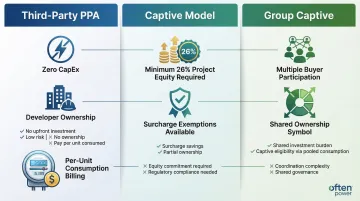
Each structure has different regulatory treatment under state electricity laws. Choosing between them requires weighing your consumption profile, state-level open access policies, load factor, and appetite for capital deployment — all factors the sections below break down in detail.
Top Solar PPA Companies in India 2026
These companies were shortlisted based on installed capacity, C&I track record, pan-India presence, tariff competitiveness, and contract flexibility. Match your load profile — size, operating hours, and state — against each developer's strengths to identify the right fit.
ReNew Power
ReNew Power is one of India's largest independent power producers with significant renewable capacity across solar, wind, and hybrid projects. The company has extensive experience serving large C&I customers through long-term PPAs.
Key differentiators:
- Round-the-clock (RTC) power capability through hybrid solar-wind-storage portfolios
- Presence across most major states with strong project delivery track record
- Hybrid project structuring that enables fixed tariff certainty over 15–25 year terms
| Capacity & Presence | PPA Terms | Key Differentiator |
|---|---|---|
| 10+ GW commissioned capacity across 10+ states serving C&I customers | 15–25 year contracts with fixed or escalating tariff structures | RTC power through hybrid projects — ideal for industries with 24x7 load requirements |
Adani Green Energy
Adani Green Energy is India's largest renewable energy company by capacity with a rapidly expanding portfolio of solar and hybrid projects serving utility and commercial buyers.
Key differentiators:
- Large-scale project pipeline enables competitive tariff discovery
- Pan-India presence across renewable-rich states
- Listed entity with balance sheet strength supporting bankable long-term offtake contracts
- Open access and group captive structures available for loads typically above 1 MW
| Capacity & Presence | PPA Terms | Key Differentiator |
|---|---|---|
| 10+ GW operational capacity with pan-India presence in 12+ states | Open access and group captive structures available for C&I buyers | Scale advantage delivering highly competitive tariffs for large industrial loads (typically above 1 MW) |
Greenko Group
Greenko is a major integrated energy company known for pumped hydro storage paired with solar and wind, enabling firm and dispatchable power delivery — particularly valuable for energy-intensive industries requiring uninterrupted supply.
Key differentiators:
- Energy storage integration for dispatchable solar supply
- Experience with complex industrial power procurement structures
- Track record serving heavy industries like steel, aluminum, and cement
Greenko operates 139 assets across 15 states, generating 11,619.97 million units annually. The company's portfolio includes 3,145.50 MW of wind, 1,538.74 MW of solar, and 750.50 MW of hydro capacity.
Major C&I contracts include:
- Hindalco Industries: 100 MW round-the-clock carbon-free power through a 25-year captive offtake agreement, reducing CO2 emissions by 680,000 tonnes annually
- ArcelorMittal (AMNS): 975 MW RTC renewable energy plant with 200 MW of standalone storage capacity supplying the Hazira steel plant
| Capacity & Presence | PPA Terms | Key Differentiator |
|---|---|---|
| ~5,434 MW operational capacity across 15 states with 1,680 MW pumped storage | Storage-backed PPA structures with premium pricing for firm/dispatchable power | Dispatchable renewable power through pumped hydro storage — addresses intermittency concerns for 24x7 industries |
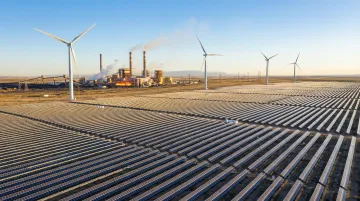
Greenko's Pinnapuram Pumped Storage Project features 1,680 MW capacity with 10,080 MWh/day storage. Five units totaling 1,200 MW were commissioned in June 2025, enabling Schedulable Power On Demand (SPOD) for industrial buyers.
Azure Power
Azure Power is an established solar-focused developer with strong emphasis on utility-scale and commercial-scale solar projects, with a focus on open access solar supply for C&I buyers in favorable regulatory states.
Key differentiators:
- Strong expertise in open access solar supply
- Financing relationships supporting competitive tariff offerings for mid-to-large C&I buyers
- Suited to C&I consumers in states with established open access frameworks
| Capacity & Presence | PPA Terms | Key Differentiator |
|---|---|---|
| 2+ GW operational portfolio with C&I presence across 8+ states | Typical tariff range ₹3.50–4.50/kWh for C&I open access solar | Open access specialization — suited for C&I consumers in states with favorable open access regulations |
Amp Energy
Amp Energy is a C&I-focused solar developer known for smaller-scale, distributed solar projects tailored to commercial complexes, warehouses, mid-size industries, and campuses — addressing segments that large IPPs may not prioritize.
Key differentiators:
- Focus on C&I-specific project sizing (100 kW–5 MW range)
- Faster commissioning timelines for distributed projects
- Flexible PPA structures suited to buyers with lower load (below 1 MW)
- Contract tenors from 10–20 years across 10+ states
Solar PPA Financing Options for C&I Businesses in India
Four primary financing structures serve C&I solar buyers in India:
- Third-party PPA — Developer owns the project; buyer pays per-unit tariff with zero capex
- Captive model — Buyer holds at least 26% equity in the project, potentially achieving lower tariff but requiring regulatory compliance
- Group captive — Multiple buyers pool consumption to meet captive eligibility, accessing captive benefits without full project ownership
- RESCO model — A variant of third-party PPA where developer finances, installs, and operates while buyer pays only for units consumed
Open access charges directly cut into net savings under off-site PPA models. These charges include:
- Wheeling charges (₹0.50–1.50/unit depending on state)
- Transmission charges (₹0.20–0.60/unit)
- Scheduling and banking charges (₹0.10–0.30/unit)
- Cross-subsidy surcharge (₹1.00–3.00/unit in most states)
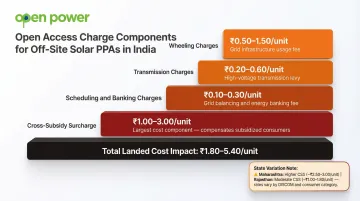
State-specific DISCOM policies create substantial variation. For example, Maharashtra imposes cross-subsidy surcharges around ₹2.50/unit, while Rajasthan's surcharges are closer to ₹1.20/unit. Running a state-specific cost breakdown before signing any PPA is essential — the difference between states can erase projected savings entirely.
Tariff structures in Indian solar PPAs typically follow three models:
- Fixed tariff — Most common for C&I, providing complete cost predictability
- Fixed with annual escalation — Typically 0–3% annual increase, still offering certainty against rising DISCOM tariffs
- Generation-linked payment — Payment tied to actual generation, transferring performance risk to developer
The escalation rate has an outsized effect on 20-year cost projections. A PPA starting at ₹3.50/unit with 2% annual escalation reaches roughly ₹5.20/unit by year 20 — a gap that can outpace the initial tariff advantage over a flat-rate deal.
Assessing true savings requires comparing net PPA tariff (after open access charges) against applicable DISCOM tariff, backed by IRR and payback analysis. Platforms like Opten Power run this analysis in real-time across multiple developers and states, covering 16 states and standardizing landing prices so buyers can compare offers without building separate models for each state.
Understanding how developers fund projects also matters for buyers. Developers typically draw on green bonds, development finance institution loans, and Priority Sector Lending (PSL). A buyer's contract bankability — credit rating, load factor, and tenure — directly affects the tariff offered, because stronger counterparties help developers secure cheaper capital and pass part of that advantage back through pricing.
How We Selected the Best Solar PPA Companies
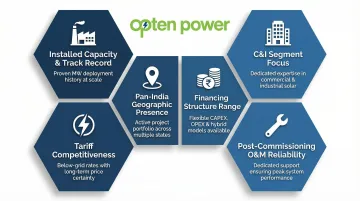
Companies were assessed on six key criteria:
- Installed capacity and project delivery track record — Demonstrated delivery across multiple large-scale projects
- C&I segment focus — Experience serving commercial and industrial buyers specifically, not just utility-scale projects
- Pan-India geographic presence — Ability to serve buyers across multiple states
- Range of financing structures offered — Flexibility to accommodate different capital and ownership preferences
- Tariff competitiveness — Ability to deliver cost-effective power through efficient project execution and financing
- Post-commissioning O&M reliability — Track record maintaining plant performance over contract life
One common mistake buyers make is prioritizing brand name over contract terms. Large developers may offer less flexible PPAs for smaller C&I loads, making mid-tier developers a better fit for buyers with consumption below 1 MW.
Beyond the primary criteria, three supporting factors also shaped the assessment:
- State-specific open access expertise and DISCOM approval navigation experience
- Grid connectivity capabilities and project bankability
- Contract certainty backed by strong developer financing arrangements
This list is not exhaustive. Other reputable developers including Torrent Power, Avaada Energy, Hero Future Energies, and Cleantech Solar also serve C&I buyers and may be better suited depending on state, load size, and industry vertical.
Conclusion
Choosing a solar PPA company requires evaluating far more than headline tariff rates. The factors that determine actual savings include:
- Contract flexibility and exit terms
- Open access expertise in your specific state
- Developer financial stability and project track record
- O&M reliability over the full contract tenure
- Net effective cost after all regulatory charges and DISCOM levies
Skipping this analysis is how projected savings turn into disappointments.
Compare multiple developers simultaneously, model real-time IRR and payback scenarios for your specific load profile, and don't commit to a PPA without full regulatory cost analysis. Opten Power's marketplace covers 4+ GW of verified solar, wind, and hybrid projects across 16 states. Real-time tariff comparisons, automated RFP generation, and DISCOM-specific cost intelligence give C&I buyers a clear picture of true landed costs before signing anything.
Frequently Asked Questions
What is a Solar PPA and how does it work for businesses in India?
A Solar PPA is a long-term contract where a developer owns and operates a solar project and supplies electricity to the buyer at a fixed or escalating per-unit tariff. The buyer pays only for energy consumed with no capital expenditure.
What is the typical contract tenure for a Solar PPA in India?
Indian C&I solar PPAs typically run for 15 to 25 years. Parties negotiate the exact tenure based on project financing requirements, payback expectations, and the buyer's operational horizon.
What is the difference between a captive and a third-party Solar PPA in India?
In a captive model, the buyer holds at least 26% equity in the project, enabling exemption from certain surcharges. In a third-party PPA, the developer retains full ownership and the buyer only purchases power, meaning the buyer faces additional open access charges in most states.
What are open access charges and how do they affect PPA savings?
Open access charges include wheeling, transmission, scheduling, banking, and cross-subsidy surcharges — all levied by state DISCOMs on third-party power supply. These vary significantly by state and must be deducted from gross tariff savings to calculate your net economic benefit.
Can a C&I buyer exit a Solar PPA contract early?
Most Solar PPAs include early termination clauses requiring the buyer to pay a penalty, often calculated as the net present value of remaining contracted revenues. Before signing, confirm whether the penalty formula is capped, and whether force majeure or business closure events qualify as exceptions.
How is the tariff in a Solar PPA determined in India?
PPA tariffs are determined through competitive bidding or bilateral negotiation, based on project costs, location-specific solar irradiation, financing costs, and contract tenure. Larger load commitments and longer tenures generally result in more competitive tariff offers.