Introduction
Indian industries face a triple squeeze: electricity tariffs have risen steadily, with average C&I rates now ranging from ₹6 to ₹15 per unit depending on the state, and grid reliability remains inconsistent.
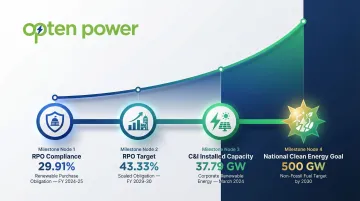
Regulatory pressure adds another layer. The Renewable Purchase Obligation (RPO) now stands at 29.91% for FY 2024-25, scaling to 43.33% by FY 2029-30, with non-compliance carrying penalties up to ₹10 lakh plus additional charges.
For most C&I buyers, alternative energy has become a straightforward business decision. The choice of source matters because different technologies suit different load profiles, locations, and operational demands. A steel plant running 24x7 needs baseload power from hybrid or wind systems, while a warehouse with daytime operations may thrive on solar alone.
This article covers six types of alternative energy sources, how each works, what it's best suited for, and how to choose the right fit for industrial or commercial needs across India's diverse industrial sectors.
Key Takeaways
- Alternative energy sources are non-fossil-fuel options—most renewable, producing significantly lower emissions
- Six key types for C&I operations: solar, wind, hybrid (solar+wind), hydropower, biomass, and geothermal
- Each differs in reliability, scalability, location dependency, and industrial suitability — no single source fits every operation
- High-load industries must align energy sources with baseload demand, grid access, and local resource availability
- Mismatched choices result in underperformance, unexpected costs, and regulatory friction — evaluating fit before committing is essential
What Are Alternative Energy Sources?
Alternative energy sources are any energy derived from sources other than conventional fossil fuels — coal, oil, and natural gas. This includes renewables like solar, wind, and hydro, as well as non-renewable alternatives such as certain biomass applications and geothermal where geological conditions allow.
Alternative vs. Renewable
Renewable energy is a subset of alternative energy — not every alternative source replenishes naturally at scale. For industrial buyers, this distinction matters when assessing lifecycle emissions, fuel security, and regulatory compliance.
India's Policy Context
That distinction also shapes how Indian policy frameworks are structured. India targets 500 GW of installed non-fossil electricity capacity by 2030, a commitment made at COP26. As of March 2026, total non-fossil capacity reached 283.46 GW — including 150.26 GW solar, 56.09 GW wind, and 51.41 GW large hydro.
Regulatory frameworks accelerating C&I adoption:
- Green Energy Open Access (GEOA) Rules 2022: Reduced minimum eligibility from 1 MW to 100 kW
- RPO Obligations: Mandatory renewable procurement scaling to 43.33% by FY 2029-30
- Corporate PPAs: Long-term bilateral agreements enabling cost predictability
Why Alternative Energy Matters for Industrial & Commercial Operations
The Business Case for Switching
Fossil fuel-linked grid tariffs expose industries to price volatility, cross-subsidisation, and demand charges. Alternative energy via captive or open-access models can cut costs significantly — corporate PPAs enable savings up to 40% compared to grid power in high-tariff states.
What Staying on the Grid Costs You
Industries that delay the switch face mounting pressure from multiple directions:
- RPO shortfalls trigger penalties up to ₹10 lakh under Section 26(3) of the Energy Conservation Act
- ESG scrutiny from investors and customers is tightening, with carbon reporting now a baseline expectation
- Competitors are locking in long-term PPAs below ₹3/kWh while grid tariffs continue to climb
Reliability Is the Other Half of the Equation
Cost savings matter, but for 24x7 operations — steel plants, data centres, hospitals — supply predictability is equally critical. Structured alternative energy arrangements address both. India's C&I sector had adopted 37.79 GW of corporate renewable capacity by March 2024, a figure that reflects how decisively large consumers have moved.
6 Types of Alternative Energy Sources
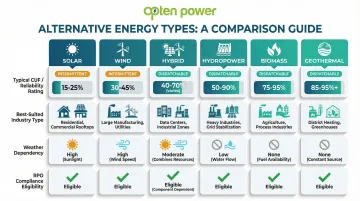
No single alternative energy type is universally optimal. The right source depends on:
- Facility load profile (daytime vs. 24x7)
- Geographic location (solar irradiation, wind speed, grid connectivity)
- Capital appetite (capex vs. opex preference)
- Operational hours and reliability requirements
Solar Energy
Description: Solar energy converts sunlight into electricity using photovoltaic (PV) panels or heat via solar thermal systems. India's most widely deployed alternative energy technology, available as rooftop, ground-mounted, or floating solar configurations.
Best Suited For: Industries with large rooftop or land areas and high daytime power consumption:
- Warehouses and manufacturing units
- Commercial complexes and IT parks
- Hospitals with predictable daytime loads
- Particularly effective in high-irradiation states like Rajasthan, Gujarat, and Maharashtra
Key Strengths:
- Near-zero fuel cost once installed
- Utility-scale solar LCOE in India dropped to USD 0.038/kWh in 2024, a 91% decrease since 2010
- Highly scalable: from 100 kW rooftop systems to 100+ MW open-access projects
- PPA tariffs: Lowest solar tariff in 2024 was ₹2.15/kWh, with SECI auctions averaging ₹2.48–2.49/kWh
- Compatible with corporate PPA structures
Limitations:
- Output is intermittent — dependent on sunlight hours and seasonal variation
- Cannot serve 24x7 baseload demand alone without battery storage or grid backup
- Transmission charges and banking restrictions under open access vary by state
Solar works best when consumption peaks during daylight hours. For operations that run around the clock, wind or hybrid configurations close the gap.
Wind Energy
Description: Wind energy captures kinetic energy from moving air using turbines. Available as onshore wind farms (typically 2–5 MW per turbine) and offshore installations. Power purchase typically occurs through open access or group captive models.
Best Suited For: High-load industries in wind-rich geographies:
- Tamil Nadu, Gujarat, Rajasthan, Andhra Pradesh, Karnataka
- Industries running round-the-clock operations needing predictable generation distinct from solar's daytime peak
- Steel, cement, textile plants with continuous baseload demand
Key Strengths:
- Generates power day and night, independent of sunlight
- Natural hedge against solar-only risk
- Smaller land footprint per unit of energy in high-wind zones
- Onshore wind LCOE reached USD 0.038/kWh in 2024
Limitations:
- High upfront capital for wind farm development
- Turbine siting requires wind resource assessment and environmental approvals
- 56% of annual generation occurs during monsoon season (June–September), requiring careful yield analysis
- Lower generation during non-monsoon months in certain regions
Where solar and wind each have blind spots, combining them at a single project site addresses both.
Hybrid Energy (Solar + Wind)
Description: Hybrid energy systems combine solar and wind generation at a single project site or through a blended PPA. Designed to flatten the generation curve by offsetting solar's daytime output with wind's evening and night generation, improving overall Capacity Utilisation Factor (CUF).
How It Differs: Unlike standalone solar or wind, hybrid projects deliver more uniform power across 24 hours. This reduces dependence on grid backup or storage, making them the preferred choice for industries with continuous process operations.
Best Suited For:
- Steel, cement, fertiliser, and process industries with 24x7 demand
- Data centres and large commercial complexes with flat load curves
- Operations where round-the-clock renewable supply is operationally necessary
Key Strengths:
- Higher effective CUF: SECI auctions mandate minimum 30% CUF for hybrid projects — compared to 17% for standalone solar and 22% for standalone wind
- Lower storage requirement compared to solar-only solutions
- Hybrid systems represented 40% of total awarded renewable capacity in H1 2024, with awarded capacity doubling from 5 GW to 12 GW
- Tariffs range ₹3.15–3.65/kWh, with the lowest at ₹3.15/kWh in SECI's Tranche VII
- Available through platforms like Opten Power that aggregate solar, wind, and hybrid capacity across 16 states
Limitations:
- More complex project development requiring both solar and wind resource assessment
- Higher upfront capital than standalone technologies
- Site selection must balance both solar irradiation and wind speed profiles
Hydropower
Description: Hydropower generates electricity by directing water flow through turbines. Comes in large-scale run-of-river or reservoir-based hydro plants and smaller micro/mini-hydro systems suitable for decentralised use. Classified as renewable for RPO compliance in India.
Best Suited For: Industries procuring power from hydro-rich states through long-term PPAs:
- Himachal Pradesh, Uttarakhand, Sikkim
- Run-of-river hydro well-suited for industries needing stable baseload power without solar or wind intermittency
Key Strengths:
- Highly reliable and dispatchable — output can be ramped up or down based on demand
- Low operating cost once infrastructure is built
- Contributes to RPO compliance (energy from projects commissioned after March 8, 2019 qualifies for Hydro Power Obligation)
- Long asset life: 50+ years for civil components, 40+ years for electro-mechanical equipment
- O&M costs average 2–2.5% of CAPEX annually
Limitations:
- Large hydro carries significant environmental and displacement concerns
- Run-of-river projects operate at 30–60% capacity factor, sensitive to seasonal river flow variations
- New large hydro development is increasingly constrained by ecological regulations and geography
- Long project development timelines
Biomass Energy
Description: Biomass energy is generated by burning or processing organic materials — agricultural residues, wood waste, sugarcane bagasse, industrial organic waste — to produce electricity, heat, or biogas. Widely used in co-generation setups within agro-processing industries.
Best Suited For: Industries generating organic waste as a by-product:
- Sugar mills, rice mills, paper plants, textile units
- Industries in agricultural belts needing thermal energy for process heat
- Facilities where biomass serves as an in-house fuel source
Key Strengths:
- Dispatchable, on-demand power with no weather dependency
- Reduces waste disposal costs when using in-house organic waste
- Supports RPO compliance under biomass-specific obligations
- India's installed biomass capacity reached 9.82 GW bagasse cogeneration and 1.04 GW non-bagasse by March 2026
- REC multiplier of 2.5 for biomass/biofuel projects enhances compliance value
Limitations:
- Feedstock sourcing at scale is a logistics challenge — consistent, quality biomass supply is not guaranteed
- Combustion produces emissions (NOx, particulates), though far lower than coal
- Not suitable for urban or space-constrained facilities
- Ministry of Power mandates 5% biomass pellet co-firing in coal plants (rising to 7% in FY 2025–26), creating feedstock competition
Geothermal Energy
Description: Geothermal energy taps heat stored beneath the Earth's surface. Used for electricity generation (high-temperature hydrothermal systems) or direct heat applications (low-temperature geothermal for space heating and process heat). Geothermal electricity generation in India remains at early exploration stage.
Best Suited For: Direct heat applications for industries in geothermal-active zones:
- Ladakh, parts of Himachal Pradesh, Chhattisgarh
- Globally mature in Iceland, Kenya, and the Philippines; the Indian context remains nascent for grid-scale power
Key Strengths:
- Consistent baseload power or heat, entirely weather-independent
- Extremely low land footprint
- Near-zero fuel cost once wells are drilled
- Lifecycle emissions of 6–79 gCO2eq/kWh, among the lowest of any energy source
Limitations:
- Exploration and drilling carry high risk alongside significant upfront capital
- Severely location-dependent: only viable where subsurface heat is accessible at reasonable depth
- GSI identified 381 hot springs and 10 geothermal provinces, but the absence of large-scale commercial projects means a limited vendor ecosystem
- Regulatory clarity still developing — not a near-term option for most industrial buyers
- Global installed capacity reached only 15.4 GW by end of 2024
How to Choose the Right Alternative Energy Source for Your Business
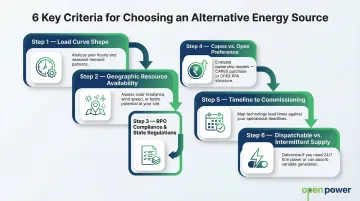
The right energy source for your business depends on your facility's load profile, location, and procurement structure — not which technology is generating the most headlines right now.
Practical Evaluation Checklist:
Annual energy consumption and load curve shape
- Daytime-only operations → Solar
- 24x7 continuous demand → Hybrid or wind
- Mixed profiles → Hybrid with storage
Geographic resource availability
- High solar irradiation (Rajasthan, Gujarat) → Solar
- Coastal/wind-rich zones (Tamil Nadu, Gujarat) → Wind
- Agricultural belts with organic waste → Biomass
RPO compliance requirements and state regulations
- Check your state's RPO trajectory and shortfall penalties
- Evaluate open access charges: Cross-Subsidy Surcharge (CSS), Additional Surcharge (AS), wheeling charges
- Some states waive charges for green hydrogen or waste-to-energy
Capex vs. opex preference
- Full ownership (captive) → Higher upfront investment, full control
- Corporate PPA (third-party) → Zero capex, fixed tariff, no maintenance
- Group captive → Minimal equity, shared ownership, regulatory benefits
Timeline to commissioning
- Solar rooftop: 3-6 months
- Ground-mounted solar: 9-12 months
- Wind/hybrid: 12-18 months
- Hydro/geothermal: Multi-year development
Need for dispatchable vs. intermittent supply
- Intermittent acceptable → Solar or wind alone
- Baseload required → Hybrid, biomass, or hydro
Common Mistakes to Avoid:
- Choosing the most talked-about technology rather than best-fit
- Underestimating state-specific regulatory costs (wheeling, banking, ISTS charges)
- Overlooking need for hybrid or storage solutions when 24x7 supply is required
- Ignoring seasonal generation patterns (monsoon wind, winter solar dips)
Opten Power's marketplace lets businesses compare tariffs, savings, and ROI across multiple energy sources and developers in one place. IRR calculations and regulatory analysis are available on demand, so procurement decisions are grounded in numbers rather than assumptions.
Frequently Asked Questions
What are the main alternative sources of energy?
The primary alternative energy sources are solar, wind, hydropower, biomass, geothermal, and hybrid systems (solar+wind). These are broadly defined as non-fossil-fuel energy sources, most of which are renewable and emit lower greenhouse gases than coal, oil, or natural gas.
What are the sources of energy for industrial development?
Solar and wind (via open access PPAs), hybrid systems for 24x7 operations, biomass for process heat, and hydropower for baseload are most relevant for industrial use—with the right choice depending on location, load profile, and whether operations run continuously or only during daytime hours.
What alternative energy sources can we use instead of electricity?
Biomass (biogas, solid biomass) and geothermal energy can serve direct thermal and heat needs as alternatives to electrically powered heating. Solar thermal can also provide process heat—particularly relevant for industries with high thermal energy demand like textiles, food processing, or chemical manufacturing.
Which alternative energy source is most suitable for industrial use in India?
Solar and wind—individually or as hybrid systems—are currently the most commercially mature and cost-effective options for Indian industries. Hybrid energy is increasingly preferred for 24x7 operations due to its higher capacity utilisation factor (30%+ vs. 17% solar-only), delivering more uniform power across day and night.
What is the difference between alternative energy and renewable energy?
Renewable energy is a subset of alternative energy—all renewable sources (solar, wind, hydro) are alternative, but not all alternative energy is renewable (nuclear power, for example, is alternative but not renewable). In practice, the two terms are used interchangeably for most industrial applications.
How can businesses in India procure alternative energy?
The three main routes are open access (grid-based third-party purchases), captive power plants (owned or co-owned generation assets), and corporate PPAs (long-term agreements with developers). Open access offers flexibility, captive provides operational control, and PPAs eliminate upfront capital requirements—each with distinct regulatory and cost implications.