Introduction
As companies face mounting Scope 3 reporting obligations—SBTi supplier engagement targets, CDP supply chain program requirements, and ESG investor scrutiny—a stark reality has emerged: supply chain emissions are, on average, 11.4 times greater than operational emissions. For manufacturing-heavy sectors, the majority of a company's carbon footprint doesn't sit in its own facilities. It lives in the supply chain, particularly in energy-intensive supplier operations still running on fossil fuels.
Supplier engagement in renewable energy procurement is, therefore, a strategic imperative. When your suppliers continue operating on coal-fired grids, your own clean energy progress hits a ceiling—regardless of what you've achieved in your own operations.
This post walks through a practical framework for doing exactly that:
- Identifying the right suppliers to target
- Assessing renewable energy market options
- Setting realistic, measurable goals
- Communicating expectations to suppliers
- Running an effective procurement process
- Tracking and reporting results
Key Takeaways
- Prioritize high-emitting, high-spend suppliers rather than attempting to engage your entire base at once—start with 50–200 strategic suppliers
- Assess renewable energy options in each state or region before setting targets—procurement rules, RPO obligations, and open access norms vary significantly
- Build customized business cases showing cost savings, IRR, and risk reduction—not just environmental arguments
- RFPs, tiered recognition programs, and portfolio monitoring tools move suppliers to action—and help expand the program as adoption grows
Why Organizations Need to Engage Suppliers in Renewable Energy Procurement
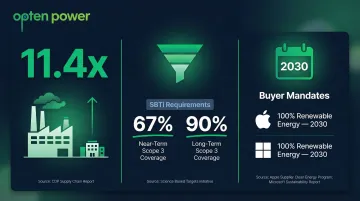
For most companies, Scope 3 emissions—those arising from the supply chain—represent the majority of their total carbon footprint. According to CDP's 2023 Global Supply Chain Report, supply chain emissions average 11.4 times higher than direct operational emissions. In consumer and manufacturing sectors, Category 1 (Purchased Goods and Services) dominates—Visa's 2025 CDP response shows it accounts for 84% of total Scope 3 emissions. A company's own clean energy procurement has limited impact if its suppliers are still running energy-intensive operations on fossil fuels.
Regulatory frameworks and buyer requirements are raising the stakes for supply chain decarbonization. The SBTi Corporate Net-Zero Standard requires companies whose Scope 3 emissions represent 40% or more of total emissions to set near-term targets covering at least 67% of Scope 3 emissions and long-term targets covering 90%. The CDP Supply Chain program now engages approximately 45,000 suppliers annually, with 250+ corporate buyer members driving accountability.
Major buyers are enforcing strict timelines on top of this. Apple mandates 100% renewable electricity for its direct manufacturing supply chain by 2030, while Microsoft requires suppliers to transition to 100% carbon-free electricity for delivered goods by the same deadline.
The case for supplier engagement goes beyond compliance. Suppliers that adopt renewable energy lower operating costs, improve their own ESG standing, and strengthen relationships with buyers who are making decarbonization a condition of continued business. CDP reports that suppliers are 52% more likely to reduce annual emissions when buyers offer financial incentives compared to training alone. Renewable energy adoption, in other words, benefits both sides: lower costs for suppliers, reduced Scope 3 exposure for buyers.
Step 1: Identify and Prioritize the Right Suppliers
Step 1: Identify and Prioritize the Right Suppliers
Criteria for Building a Focused Supplier List
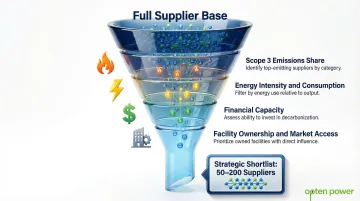
Start with a "mass balance" approach: apply a standardized baseline assessment to your full supplier base—a responsible sourcing questionnaire or automated ESG rating—to identify minimum thresholds. Then focus deeper engagement on a strategic shortlist of 50–200 high-priority suppliers defined by energy intensity, revenue dependency, operational size, and creditworthiness.
Shortlisting criteria organizations should use:
- Scope 3 emissions share attributable to that supplier
- Electricity consumption at their facilities, based on actual meter or utility bill data
- Financial capacity to enter a PPA or install on-site generation
- Materiality of their supply category to your core business operations
The GHG Protocol Supplier Engagement Guidance recommends ranking suppliers from highest to lowest by their portion of total emissions to achieve the required 67% Scope 3 coverage. When emissions data isn't available, rank by annual procurement spend as a proxy.
A larger initial cohort is better because natural attrition will occur throughout the process—and aggregated projects yield better economics for everyone involved. Walmart's Gigaton PPA convened five suppliers to execute an aggregated purchase generating approximately 250,000 MWh annually, a concrete example of aggregated procurement at scale.
Before committing resources, assess each shortlisted supplier's readiness to act. Three factors determine both the depth of engagement needed and the likely path forward:
- Presence of an internal energy manager or sustainability team
- Facility ownership vs. leased premises (owners have far more procurement flexibility)
- Market access — whether credible renewable options exist in their operating geography
These factors determine the depth and type of engagement needed. A supplier leasing a facility in a market with no open access rules will require very different support than one owning a factory in a state with robust green tariff options.
Account for Geography and Market Conditions
Country- and state-level market conditions fundamentally shape what's possible for each supplier. The availability of open access power, grid reliability, renewable energy tariff structures, regulatory approval timelines, and the maturity of EAC or REC markets all vary significantly. Segmenting the supplier list by geography is essential before designing engagement tactics.
For organizations operating in India specifically, added complexity arises from 16-state variation in DISCOM policies, open access rules, banking provisions, and wheeling and transmission charges. A supplier in Tamil Nadu will have very different procurement options than one in Uttar Pradesh.
Consider the regulatory shift in Tamil Nadu: the 2025 Green Energy Open Access Regulations eliminated annual banking in favor of monthly settlement with an 8% banking charge. This change increases the estimated landed tariff by approximately ₹0.05/kWh and is expected to reduce potential savings for third-party open access projects by up to 30%. A supplier in Tamil Nadu faces fundamentally different economics than one in Karnataka, where open access regulations differ significantly.
Organizations managing supplier engagement across multiple Indian states benefit from real-time DISCOM intelligence—platforms like Opten Power provide standardized, updated landing prices across all states, enabling accurate feasibility assessments before setting supplier targets.
Step 2: Assess the Renewable Energy Landscape and Set Program Goals
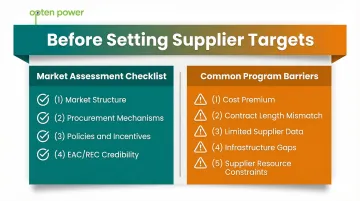
Before setting supplier goals, organizations must conduct a renewable energy market analysis for each geography where key suppliers operate. This analysis should cover:
- Wholesale and retail electricity market structure
- Available procurement mechanisms (open access, rooftop solar, green tariffs, PPAs, EACs)
- Relevant policies and incentives
- Credibility of existing tracking and certification systems
Note that this analysis should be updated regularly as markets evolve—regulatory changes can fundamentally alter project economics within a single fiscal year.
Establish a Baseline
Collect primary electricity use data from Tier 1 suppliers using utility bills or meter data, then calculate associated Scope 2 GHG emissions. This baseline creates the foundation for program goals, identifies the highest-impact targets, and enables credible Scope 3 reporting.
Keep data collection minimal and focused. Requesting too much information at once leads to supplier non-response and stalls the program before it starts.
Define the Program Scope
Organizations must decide:
- Which tier of suppliers to include (Tier 1 only vs. extending to Tier 2)
- Geographic coverage of the initial program
- Clean electricity target (e.g., 50% renewable energy by 2028)
- Procurement approach—will the program require supplier self-procurement, or will the company procure on behalf of suppliers in markets where direct procurement is not yet feasible?
Select Resource Types and Procurement Objectives
Define what "clean" means for your program: renewable, carbon-free, or both. Decide whether procurement should come from new projects (additionality) or existing ones, and whether bundled energy-plus-attributes purchases are preferred.
The RE100 technical criteria require a 15-year commissioning or re-powering date limit to ensure additionality. These choices affect both program credibility and cost—so align them with your reporting obligations before finalizing targets.
Identify Barriers Upfront
Common obstacles include:
- Cost premium of clean electricity in some markets
- Contract length mismatches between long-term renewable agreements (10–25 years) and short-term supplier purchase orders
- Limited data availability from suppliers
- Lack of renewable energy infrastructure in certain regions
- Supplier resource constraints (staff, capital)
Programs that skip this step routinely miss their targets. Calibrate goals and timelines to what's achievable in each market—factoring in infrastructure maturity, regulatory readiness, and supplier capacity.
Step 3: Communicate Expectations and Build the Business Case
Issue clear, written supplier policies that specify minimum renewable energy percentage targets by year, relevant KPIs, and the implications for the supplier relationship if targets are not met. Rather than leading with environmental idealism, effective messaging ties renewable energy adoption to continued business eligibility—making clear that decarbonization alignment is a factor in supplier evaluation.
Example of clear, direct supplier communication language:
"As part of our commitment to achieving net-zero emissions by 2040, we require our Tier 1 suppliers to transition to 50% renewable electricity by 2028 and 100% by 2030. Renewable energy adoption will be evaluated as part of our annual supplier scorecard and will influence contract renewal decisions. We are committed to supporting you through this transition with technical assistance and aggregated procurement opportunities."
Build Customized Business Cases
Use each supplier's energy consumption data, local tariff rates, and available renewable energy options to build a financial picture that resonates with factory owners and CFOs—not sustainability teams. Quantify:
- Cost savings or cost parity versus current grid tariffs
- IRR and payback period for renewable investment
- Risk reduction from long-term price volatility hedging
In India, the landed cost of third-party solar open access for HT industrial consumers in Q3 2024 ranged from ₹4.3/kWh to ₹7.4/kWh, depending on state-specific charges. Long-term PPAs (typically 10–30 years) lock in electricity prices, reducing market price volatility risk—a compelling financial argument beyond carbon reduction.
Critical confidentiality note: Final savings figures shared with suppliers should not be passed back to the buyer organization. Suppliers fear margin compression—confidentiality on pricing builds trust and encourages participation.
Communication Channels and Cadence
Engagement should not rely solely on email. In markets like India, WhatsApp is a preferred communication tool for factory-level contacts. Identify 1–2 decision-makers per supplier facility, add engagement managers to existing group chats, and maintain a regular touchpoint cadence so the program stays top of mind amid competing operational priorities.
Use Peer Success Stories and Recognition Programs
Highlighting a supplier in the same industry or geography that has successfully adopted renewable energy removes hesitation and reduces perceived risk. Organizations can further motivate suppliers through:
- Tiered recognition programs (bronze/silver/gold based on renewable energy achievement)
- Awards for milestone achievements
- Visibility with the buyer's leadership

Handle individual supplier energy cost data with discretion throughout—competitive sensitivity is real, and trust is hard to rebuild once broken.
Step 4: Run the Procurement Process — From RFPs to Signed Agreements
Structuring the RFP
Structure the RFP process to be accessible and competitive. Keep documents short — ideally under 10 pages — and clearly specify energy requirements, preferred resource types, contract duration, and evaluation criteria. Avoid excessive technical language that discourages smaller suppliers or regional developers from participating.
A competitive RFP exposes suppliers to multiple developers and pricing options at once, creating price pressure and better outcomes. For organizations running programs across multiple suppliers and states, Opten Power's Automated Tender Engine enables faster RFP creation using modular templates and pre-approved contracts — helping close deals up to 50% faster while maintaining consistency across markets.
Incorporate any existing developer relationships suppliers already have, but keep the process developer-agnostic to optimize pricing. Standardized frameworks like the EFET/RE-Source PPA contract cut transaction costs and speed up negotiations — useful when managing deals across multiple markets without favoring any single developer.
Selecting the Right Procurement Option
The right structure depends on the supplier's load size, facility ownership, grid connection, and local regulations. Here's how the main options compare:
| Procurement Option | Best For | Key Characteristics |
|---|---|---|
| Rooftop Solar | Owned facilities, moderate loads | Simplest entry point; CAPEX or OPEX/RESCO models; capacity limits vary by state |
| Open Access (Third-Party/Captive/Group Captive) | Higher loads (100 kW+) | Lowered to 100 kW threshold in 2022; group captive requires 26% equity and 51% power consumption |
| Green Tariffs | Suppliers preferring simplicity | Premium tariff from DISCOMs; should not exceed Average Power Purchase Cost + 20% Cross-Subsidy + ₹0.25 |
| Power Exchange (GDAM/GTAM) | Short-term needs | Green Day-Ahead and Term-Ahead markets; bundled energy + attributes |
| Standalone EACs/RECs | Markets where physical procurement not viable | Tradable certificates representing 1 MWh; operated by GRID-India in India |
Most supplier programs use a combination — rooftop solar for owned sites, open access for high-load facilities, and RECs to cover gaps where physical procurement isn't feasible.
Step 5: Track Progress, Verify Claims, and Scale
Establish formal data collection mechanisms — structured reporting forms or a secure digital platform — to gather supplier electricity use data and renewable energy procurement documentation on at least an annual basis. This enables Scope 3 accounting, progress-tracking against program goals, and audit readiness.
Reporting systems should be designed to protect data confidentiality and keep the supplier burden as low as possible.
Verification options:
Supplier renewable energy claims require substantiation through:
- EAC or REC retirement in a credible tracking system
- Legally enforceable contractual documentation (PPAs, green tariff agreements)
- Third-party certification (e.g., Green-e or equivalent)
The GHG Protocol Scope 2 Quality Criteria requires that contractual instruments be tracked, redeemed, retired, or canceled by or on behalf of the reporting entity to convey a unique GHG emission rate claim and prevent double counting. Organizations can verify claims internally, through a contracted third party, or via an established certification program. Choose the approach that matches the strength of the public commitment — internal audits may suffice for internal targets, while third-party certification is advisable for public-facing claims.
Use portfolio-level monitoring to identify laggards, celebrate leaders, and expand program scope over time. Organizations managing renewable energy procurement programs across multiple suppliers benefit from a unified portfolio dashboard — such as Opten Power's Portfolio Management Dashboard — that provides visibility into energy savings, contract status, and progress toward clean energy targets across all suppliers in one place.
Scaling the program:
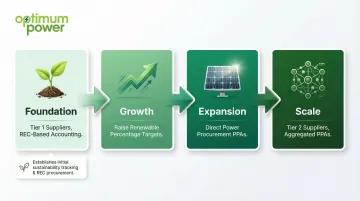
As a program matures, ambition can be increased:
- Expanding from Tier 1 to Tier 2 suppliers
- Raising renewable energy percentage targets
- Moving from REC-based accounting to direct power procurement
- Aggregating suppliers for larger, more cost-effective PPAs
Programs that have scaled through these steps show what's achievable at the enterprise level. Apple's Supplier Clean Energy Program, launched in 2015, now has over 320 suppliers — representing 95% of direct manufacturing spend — committed to 100% renewable electricity, with 16.5 GW of clean energy operational. Walmart's Project Gigaton engaged over 5,900 suppliers and hit its 1 billion metric ton emissions reduction goal six years ahead of schedule.
Frequently Asked Questions
What is supplier engagement in renewable energy procurement?
Supplier engagement in renewable energy procurement is the structured process through which a buyer works with supply chain partners to measure, adopt, and report renewable energy usage. The goal is to reduce Scope 3 emissions and meet corporate climate commitments.
How do you decide which suppliers to prioritize in a renewable energy program?
Organizations typically prioritize suppliers based on their share of the buyer's Scope 3 emissions, energy intensity of their operations, financial capacity to procure renewable energy, and the availability of credible procurement options in their geography—focusing deep engagement on a manageable shortlist of 50–200 suppliers rather than the entire base.
What renewable energy options are typically available to suppliers?
Main options include rooftop solar, open access power purchase agreements, group captive projects, and energy attribute certificates (RECs/EACs). Option availability depends on the supplier's geography, facility size, and whether they own or lease their operations.
How do you build a business case for suppliers to switch to renewable energy?
Effective business cases quantify cost savings, IRR, payback period, and long-term energy price stability, framing renewable adoption as a financial decision rather than just an environmental one. Using the supplier's actual energy data and local tariff rates makes the case far more persuasive.
What is the role of RECs or EACs in supplier renewable energy claims?
RECs or EACs are how suppliers formally claim renewable electricity use. Each certificate represents the environmental attributes of one MWh of generation and must be retired in a credible tracking system for the claim to be considered valid.
How does supplier renewable energy procurement reduce a company's Scope 3 emissions?
When suppliers adopt renewable energy, the GHG emissions associated with their electricity use (which appear in the buyer's Scope 3, Category 1) decrease. This means the buyer can report lower supply chain emissions, make progress toward SBTi supplier engagement targets, and demonstrate credible Scope 3 reduction over time.